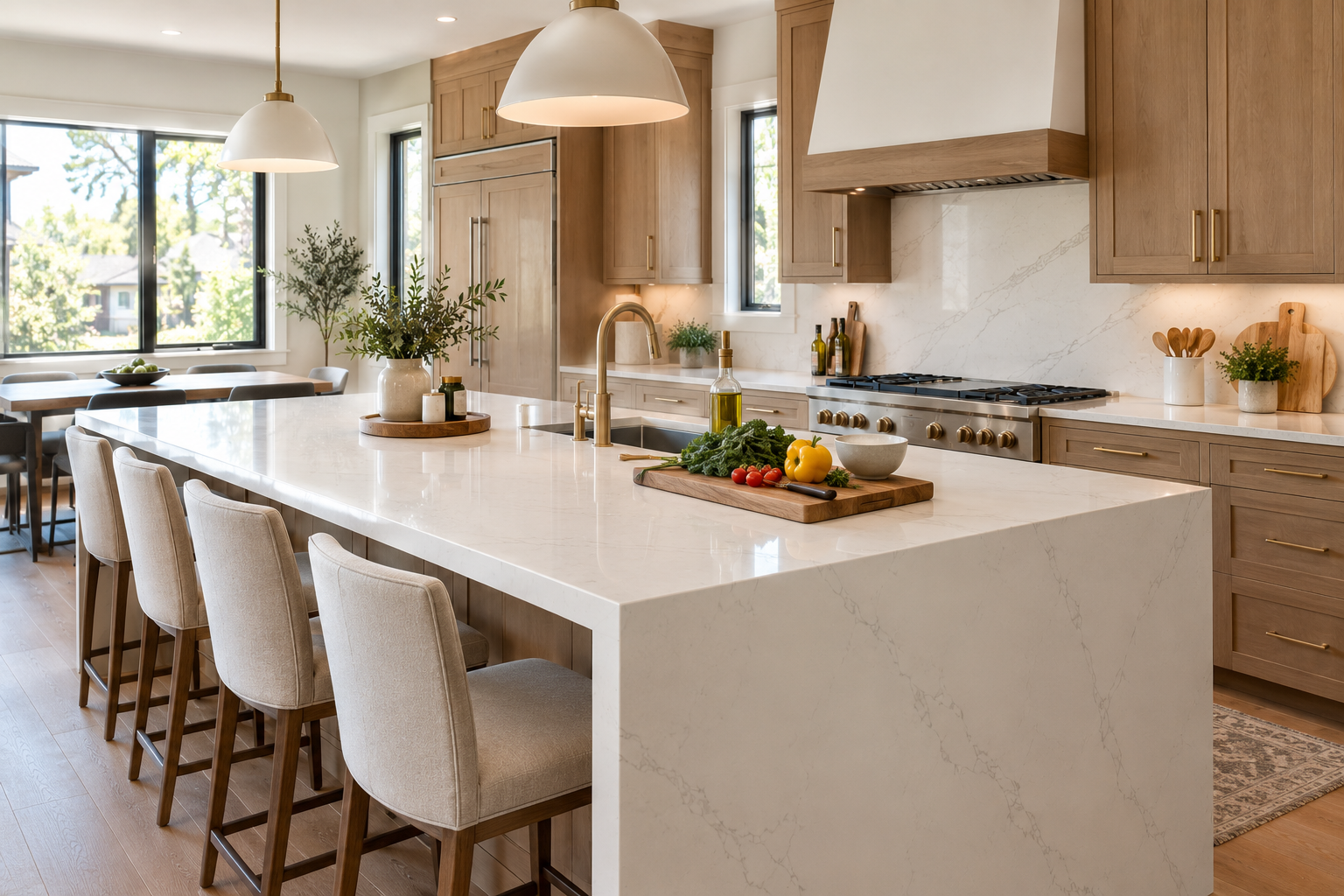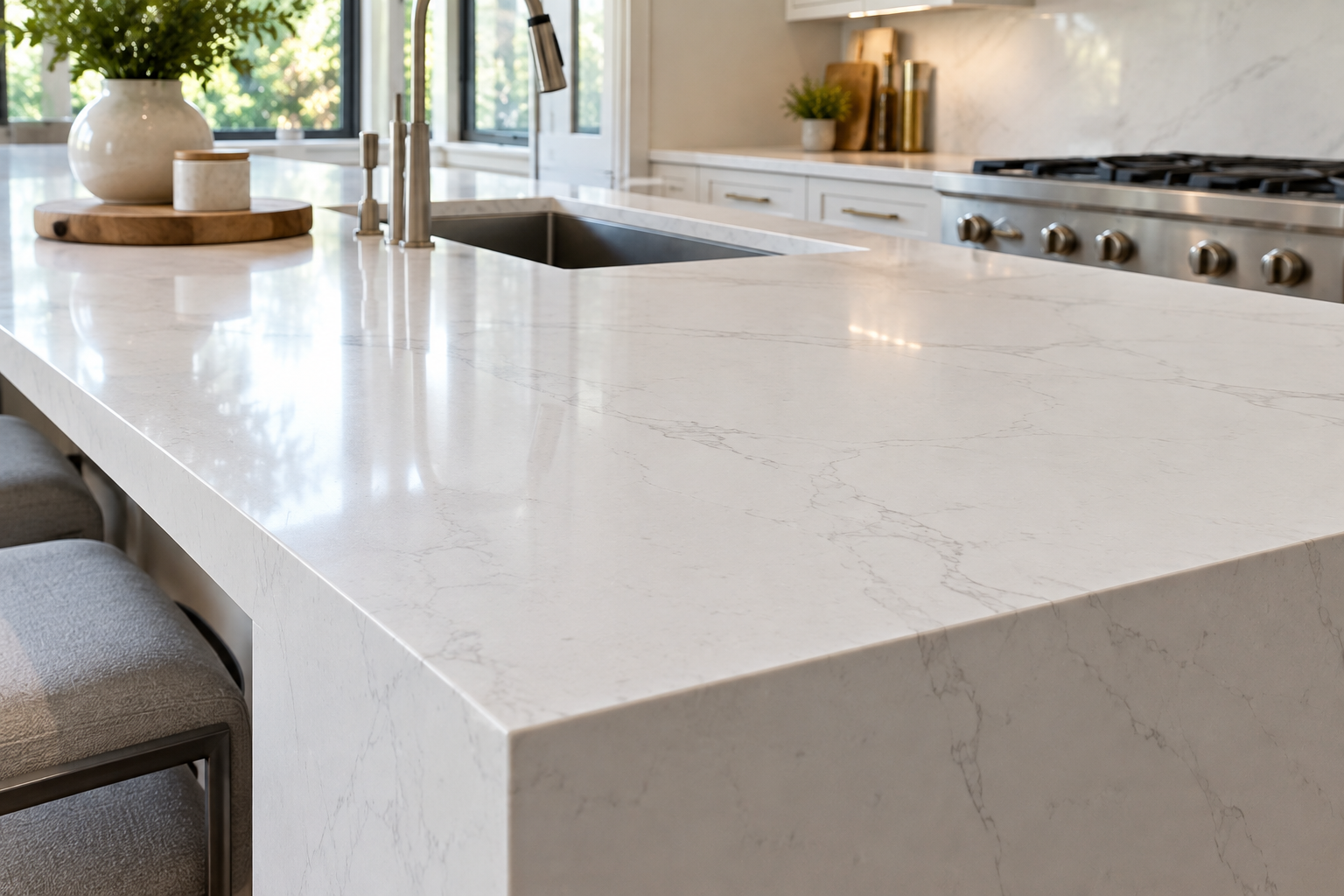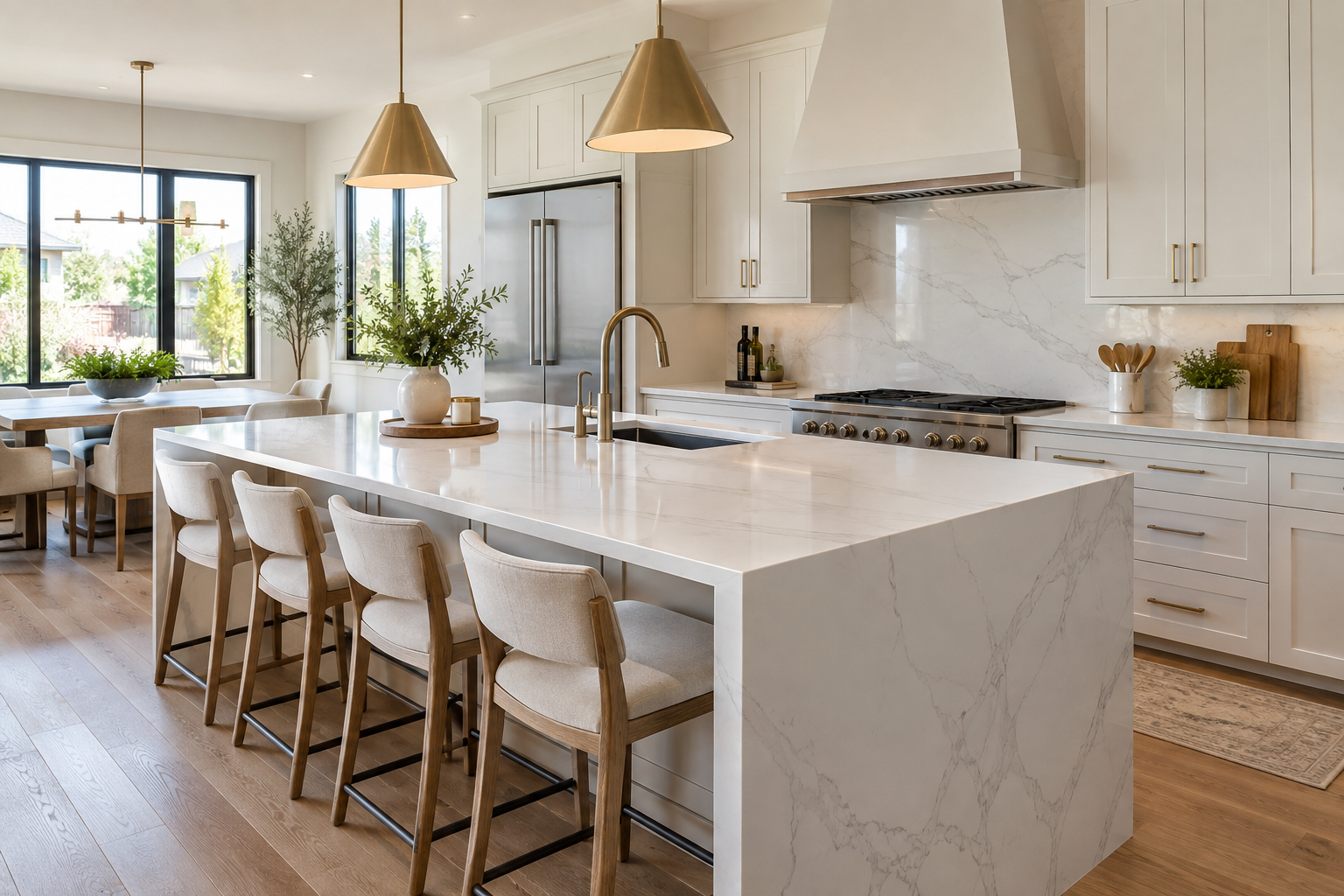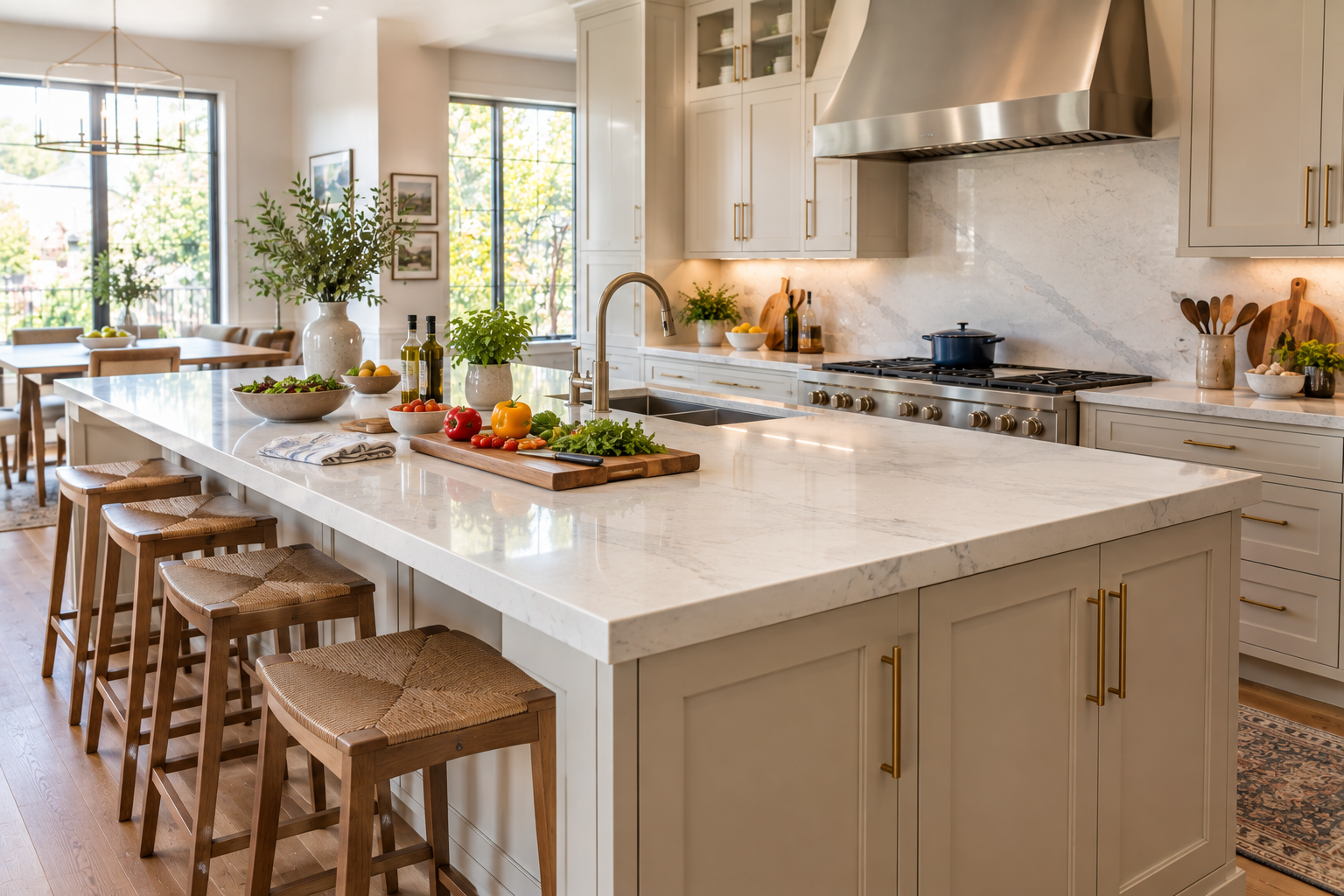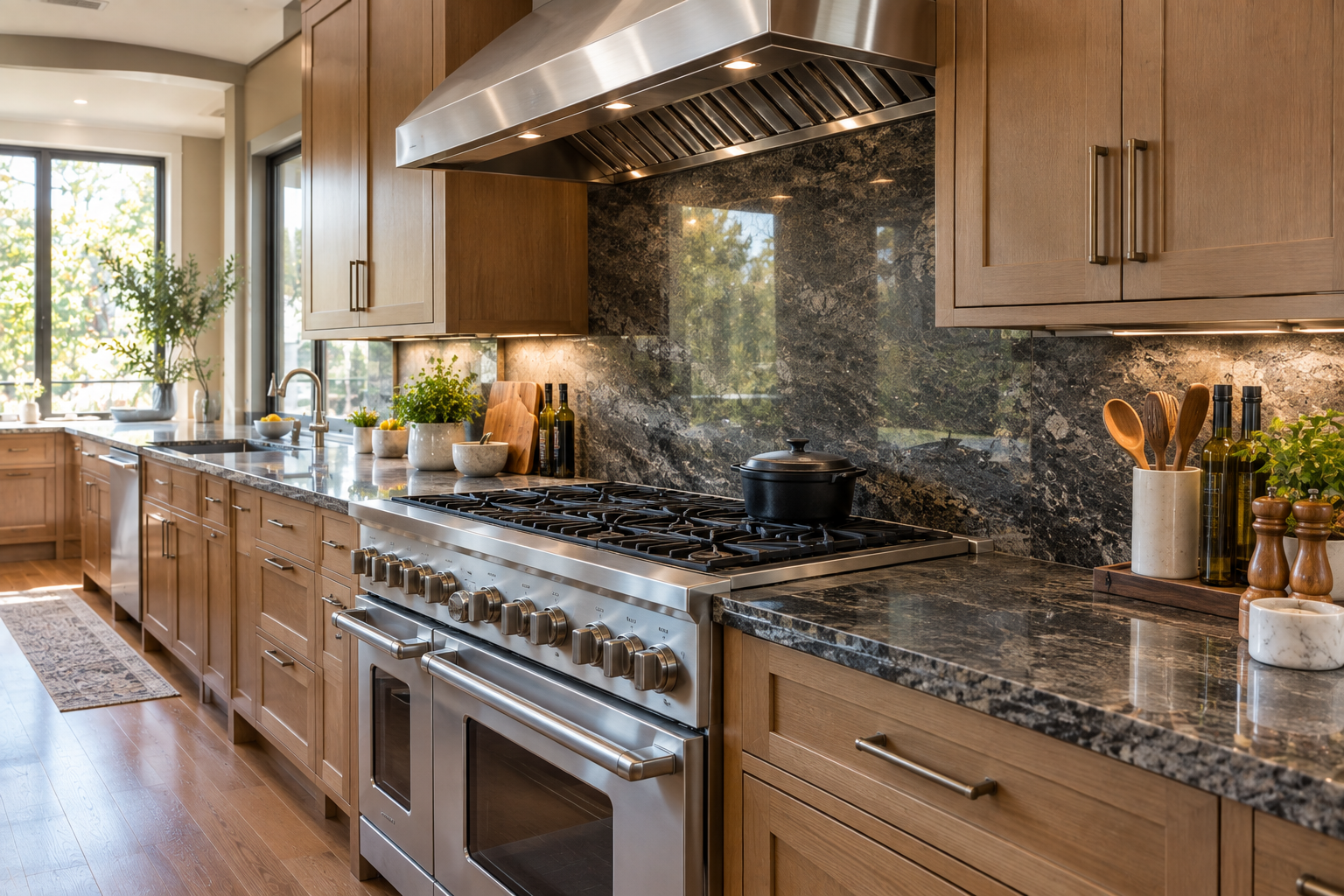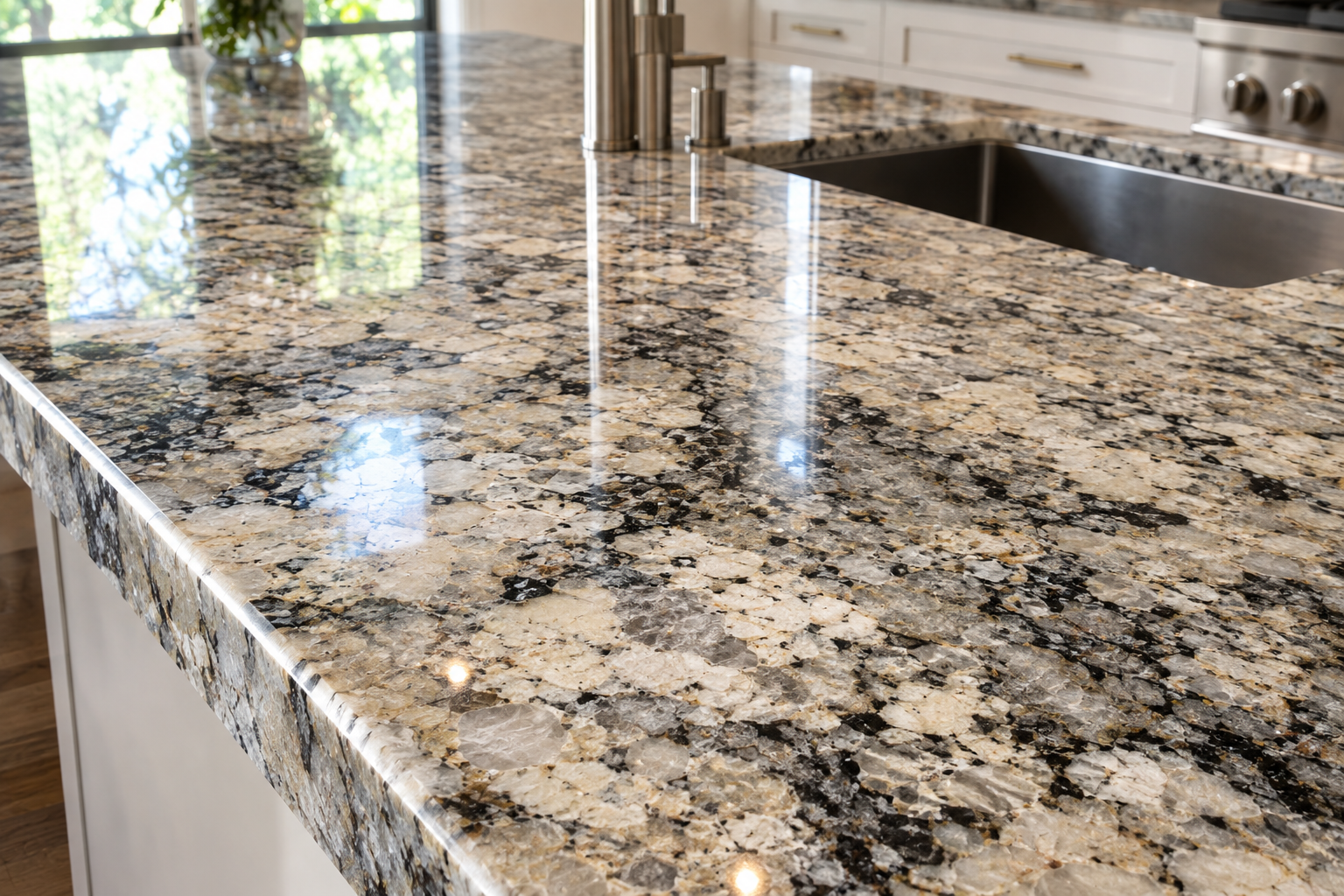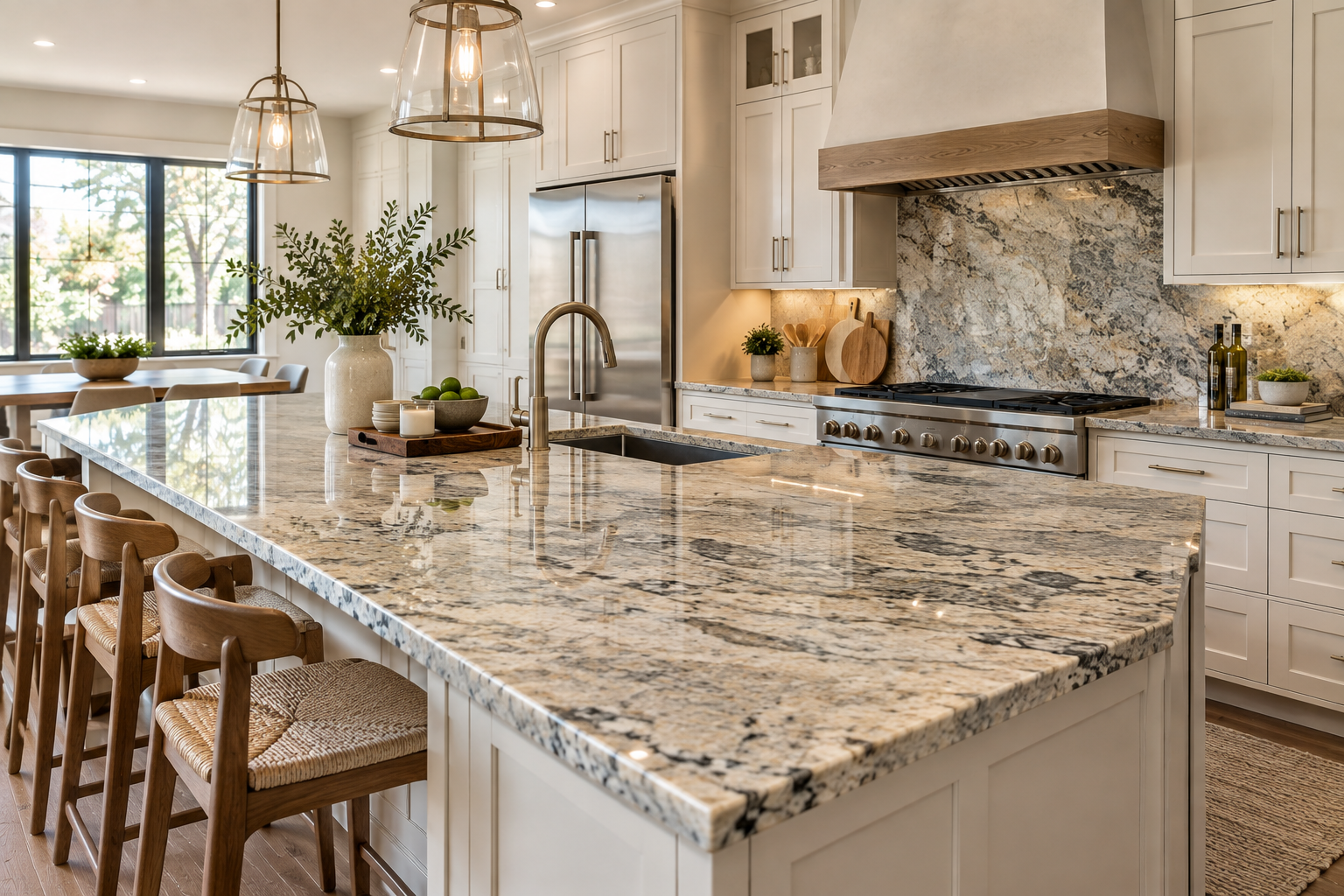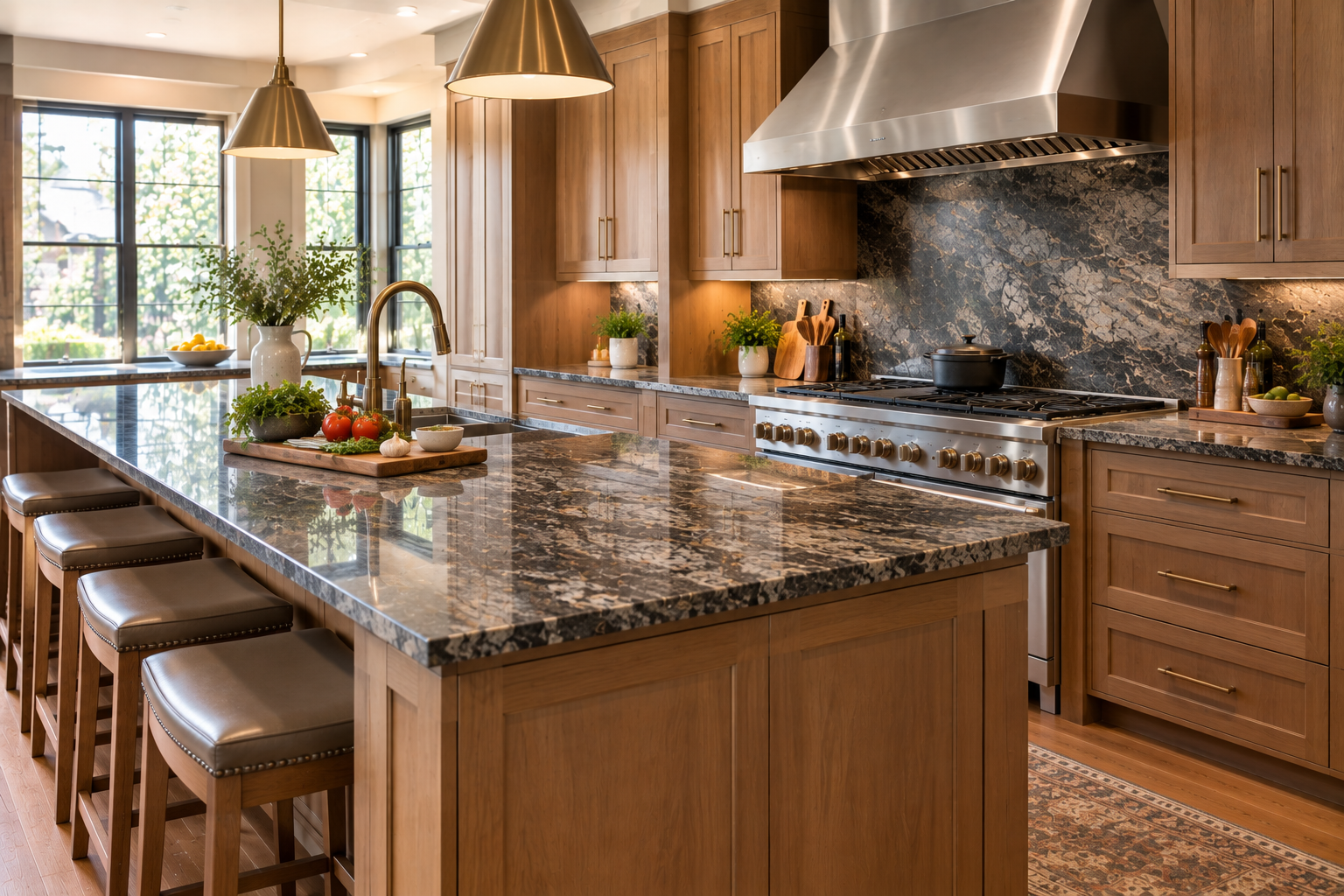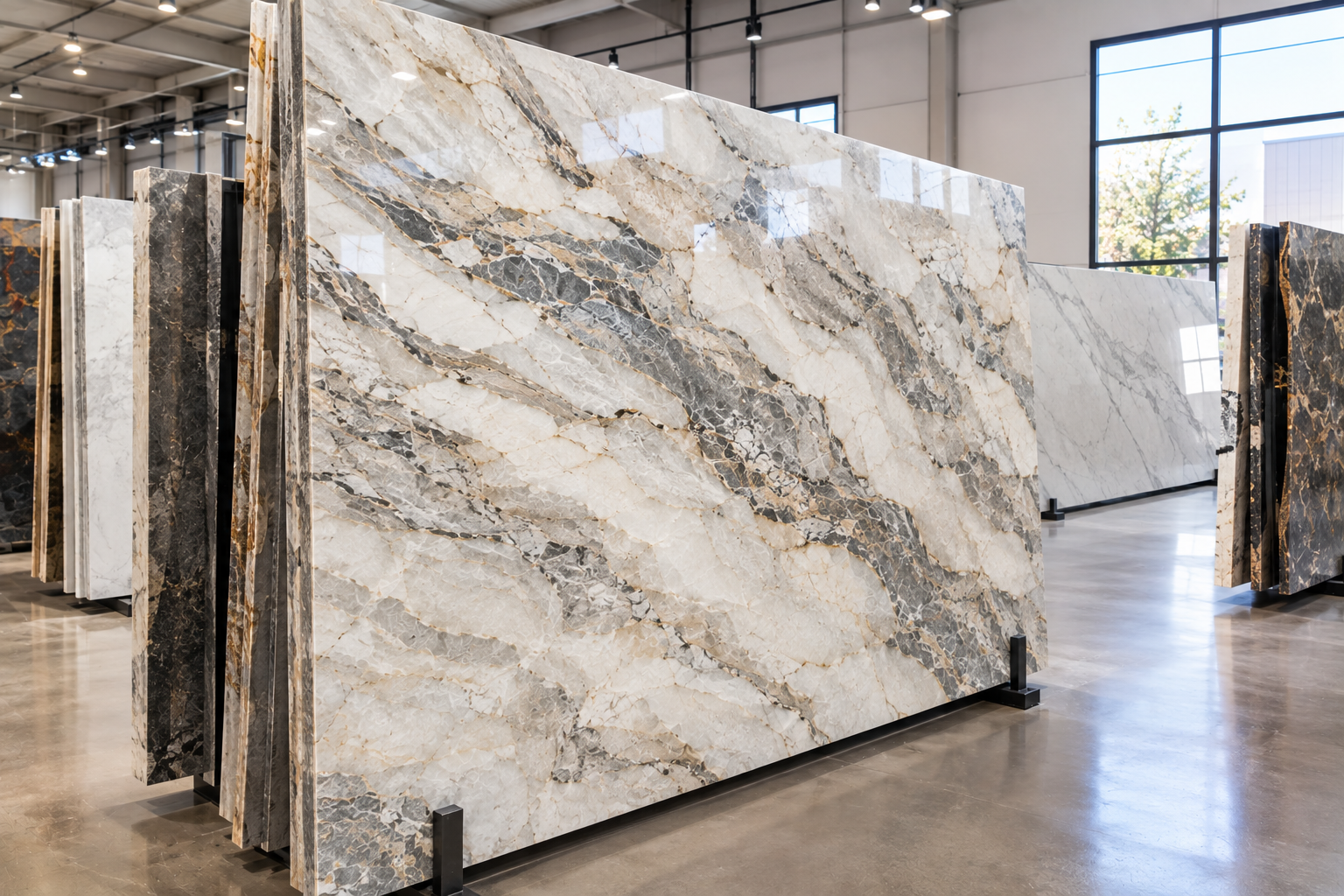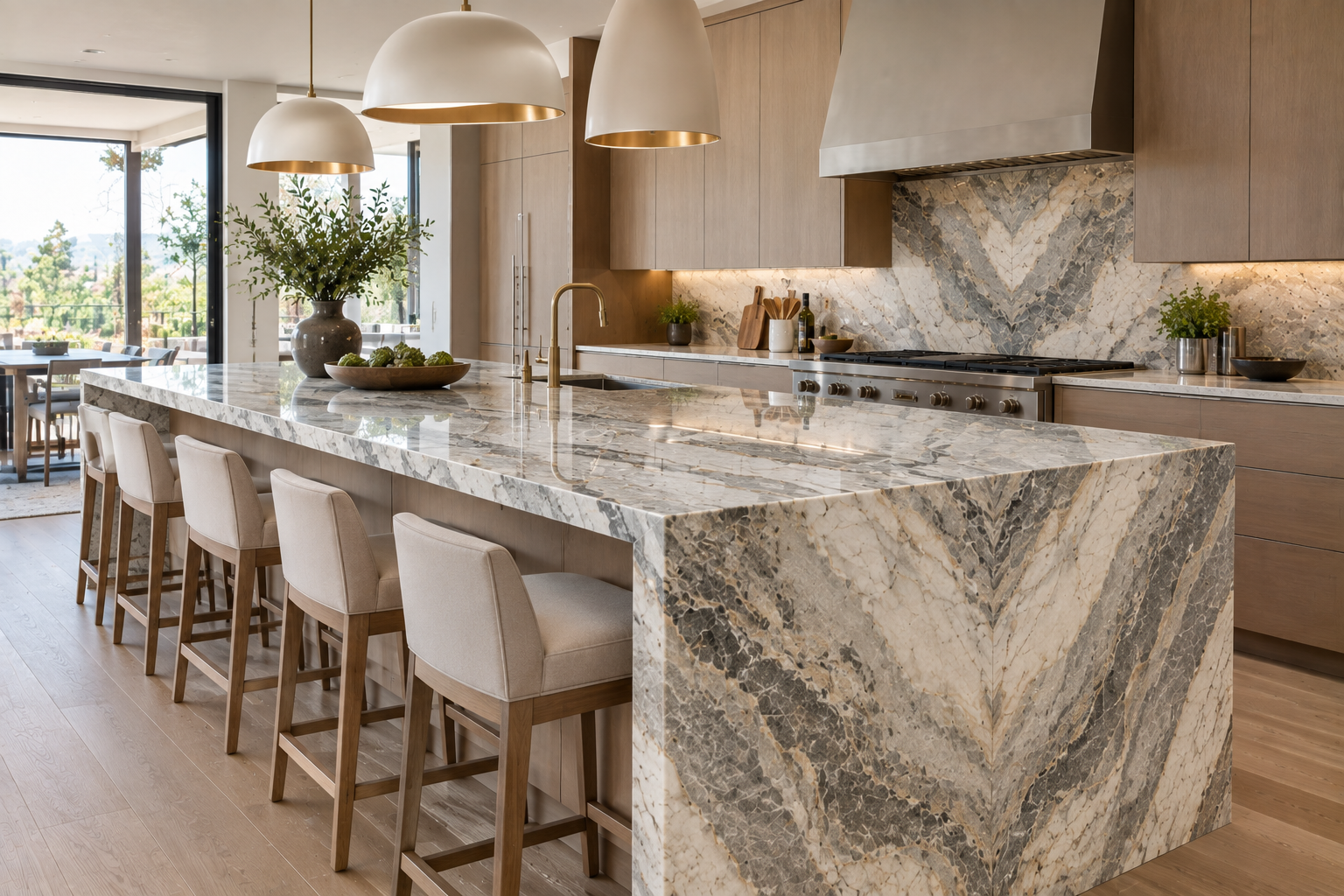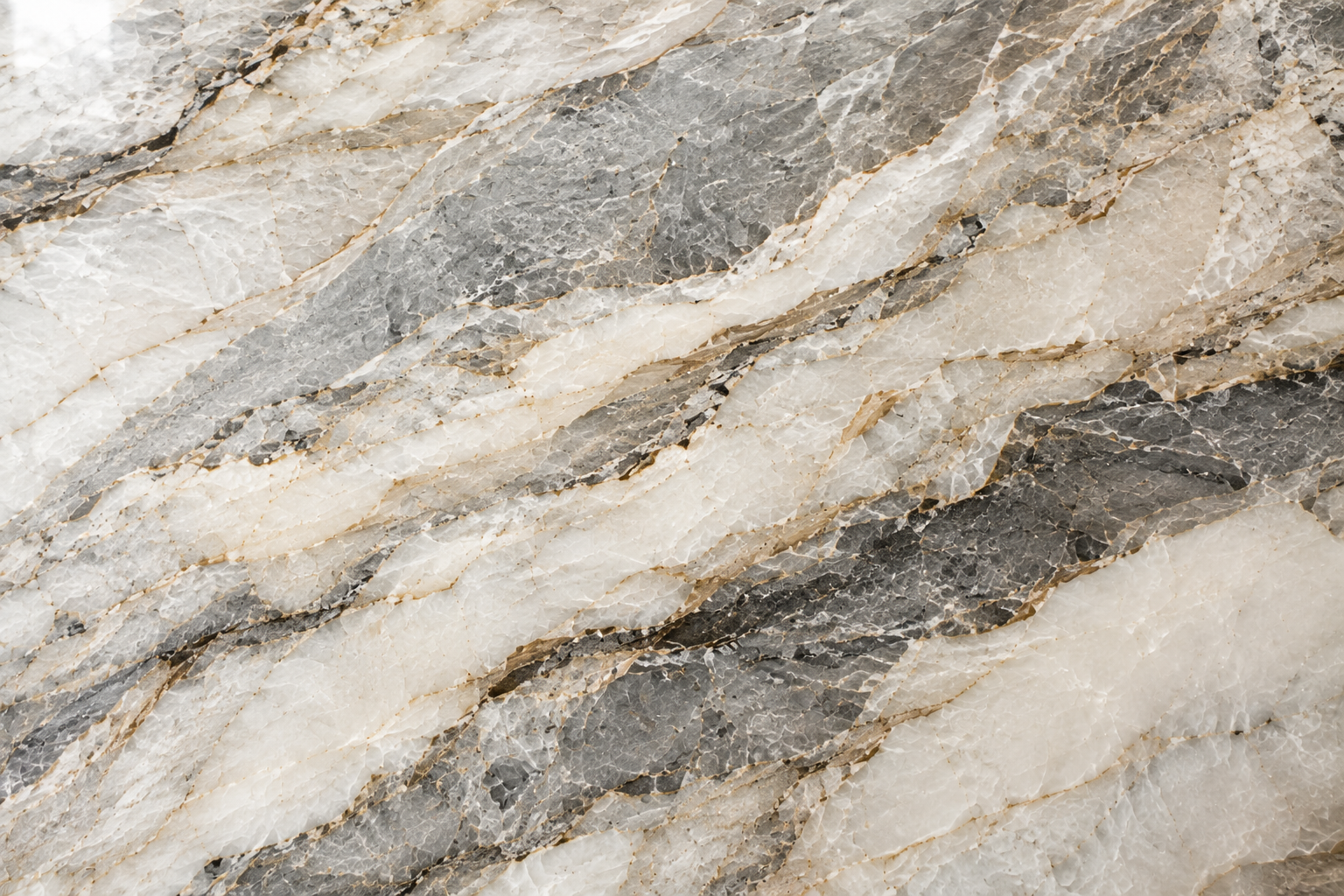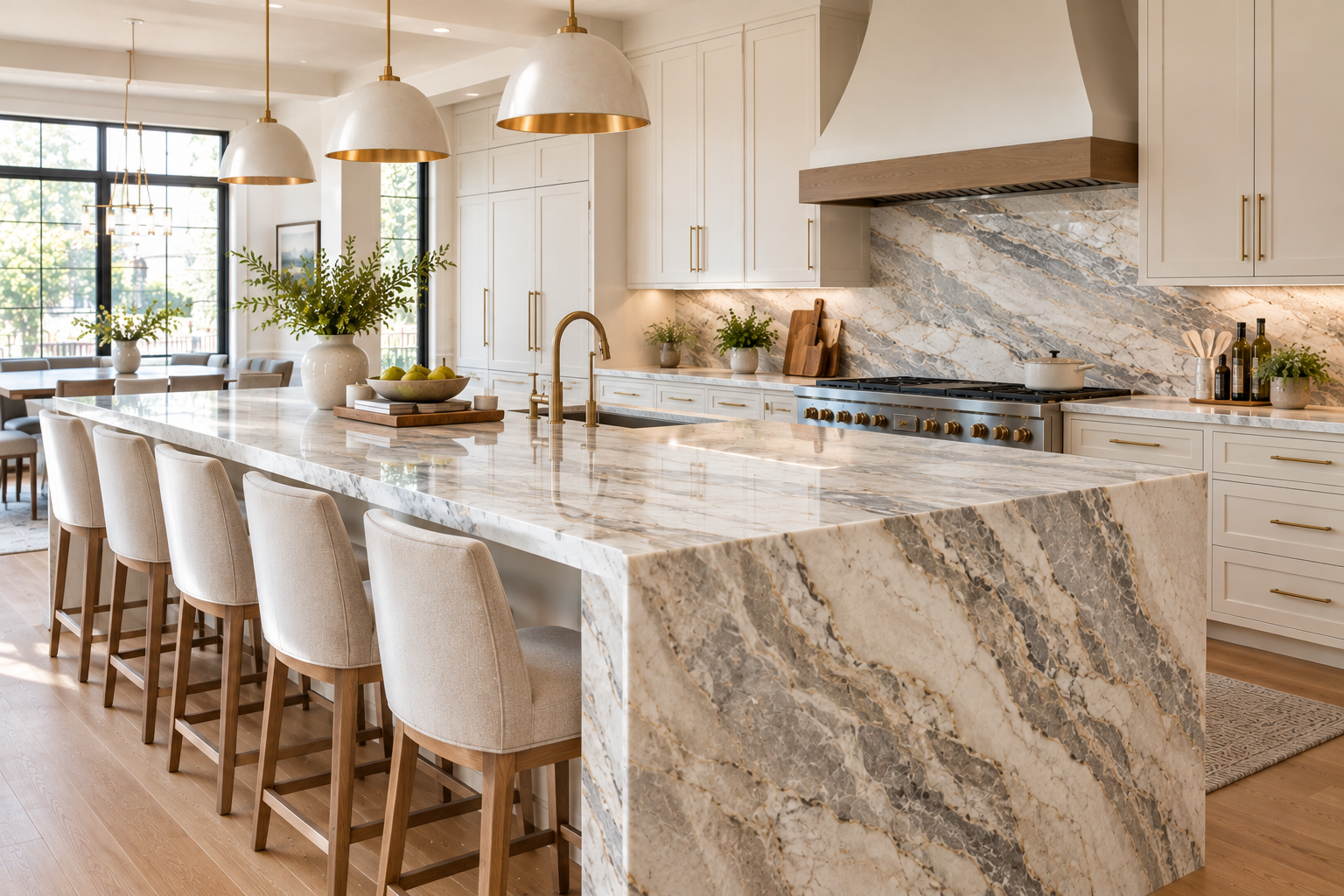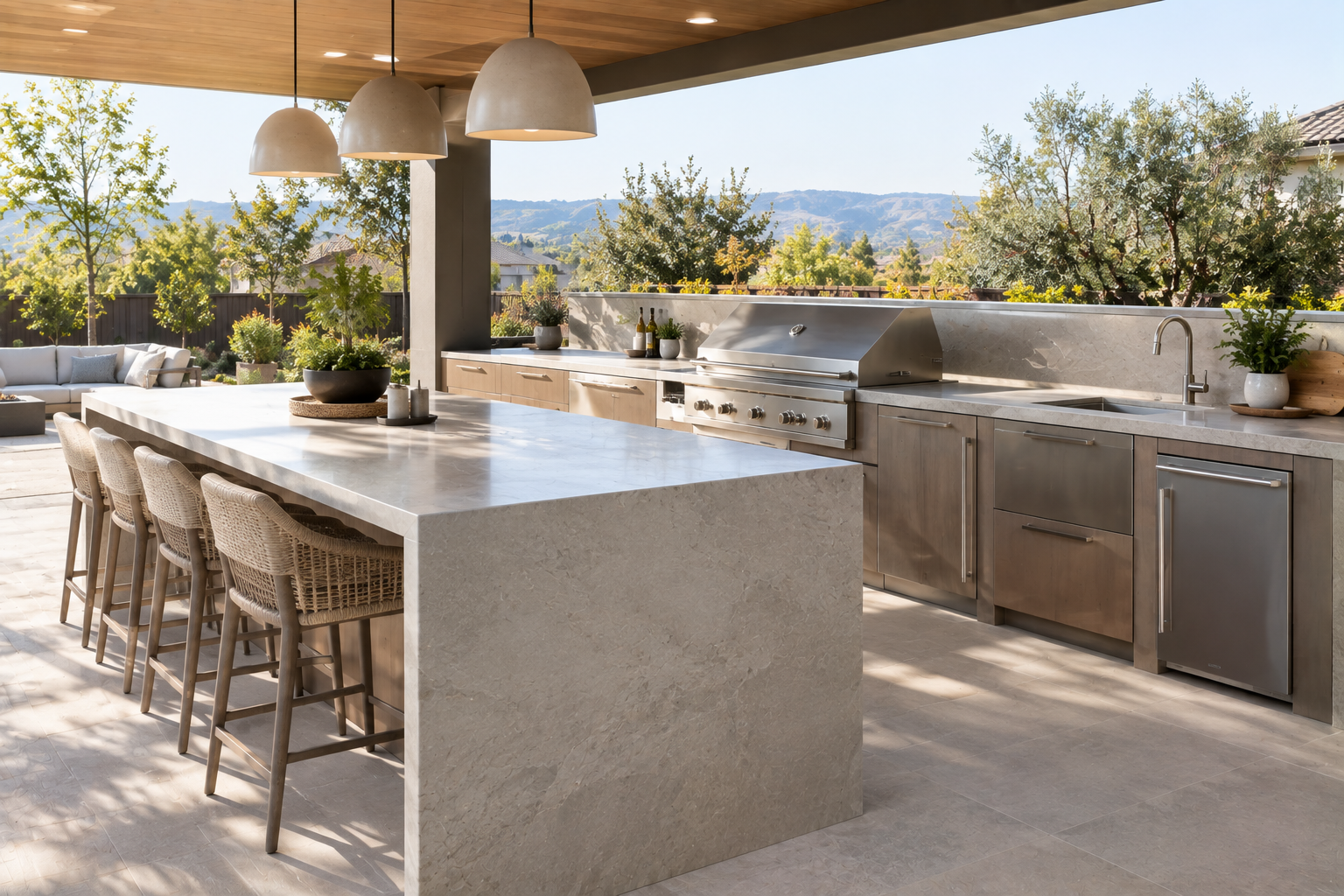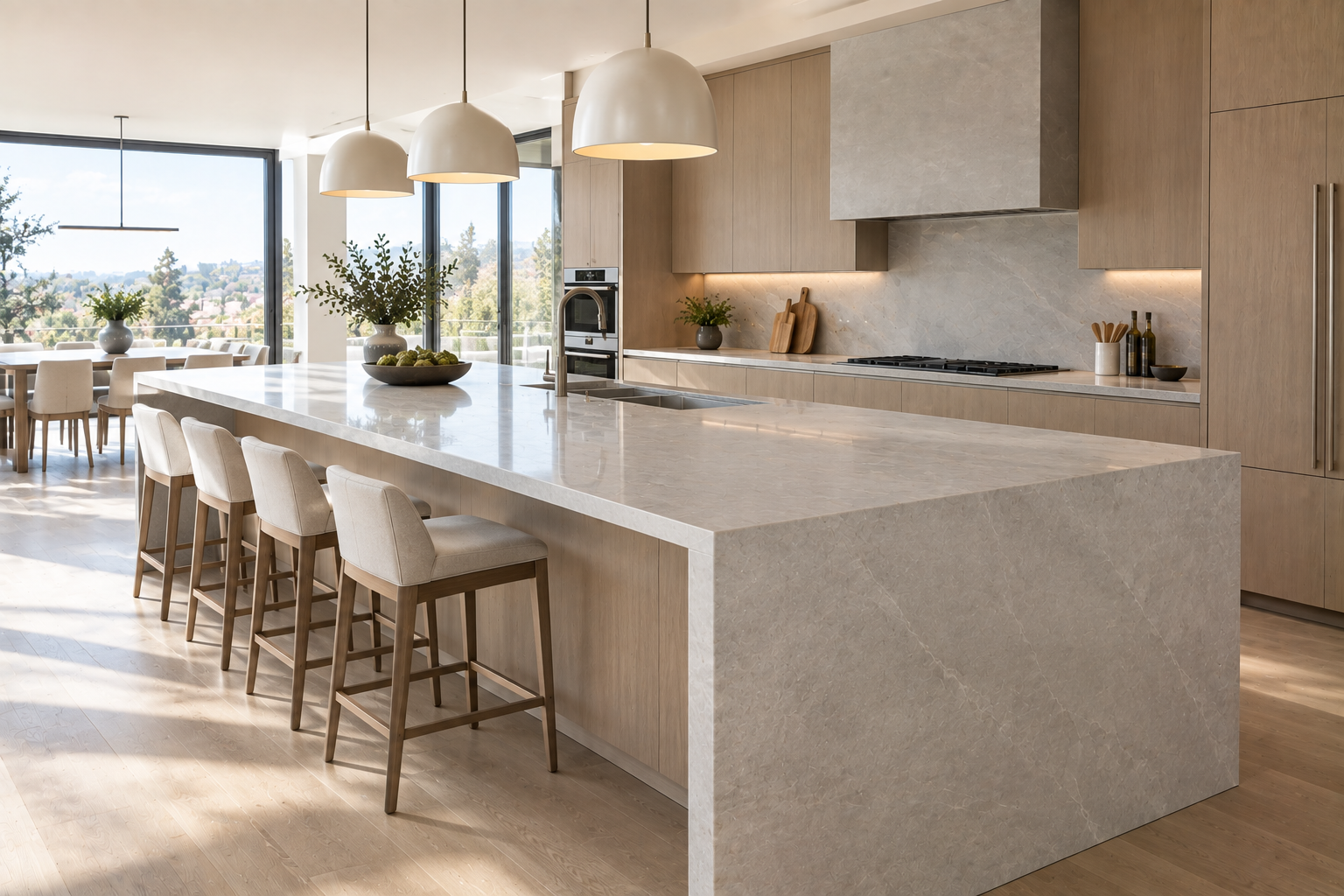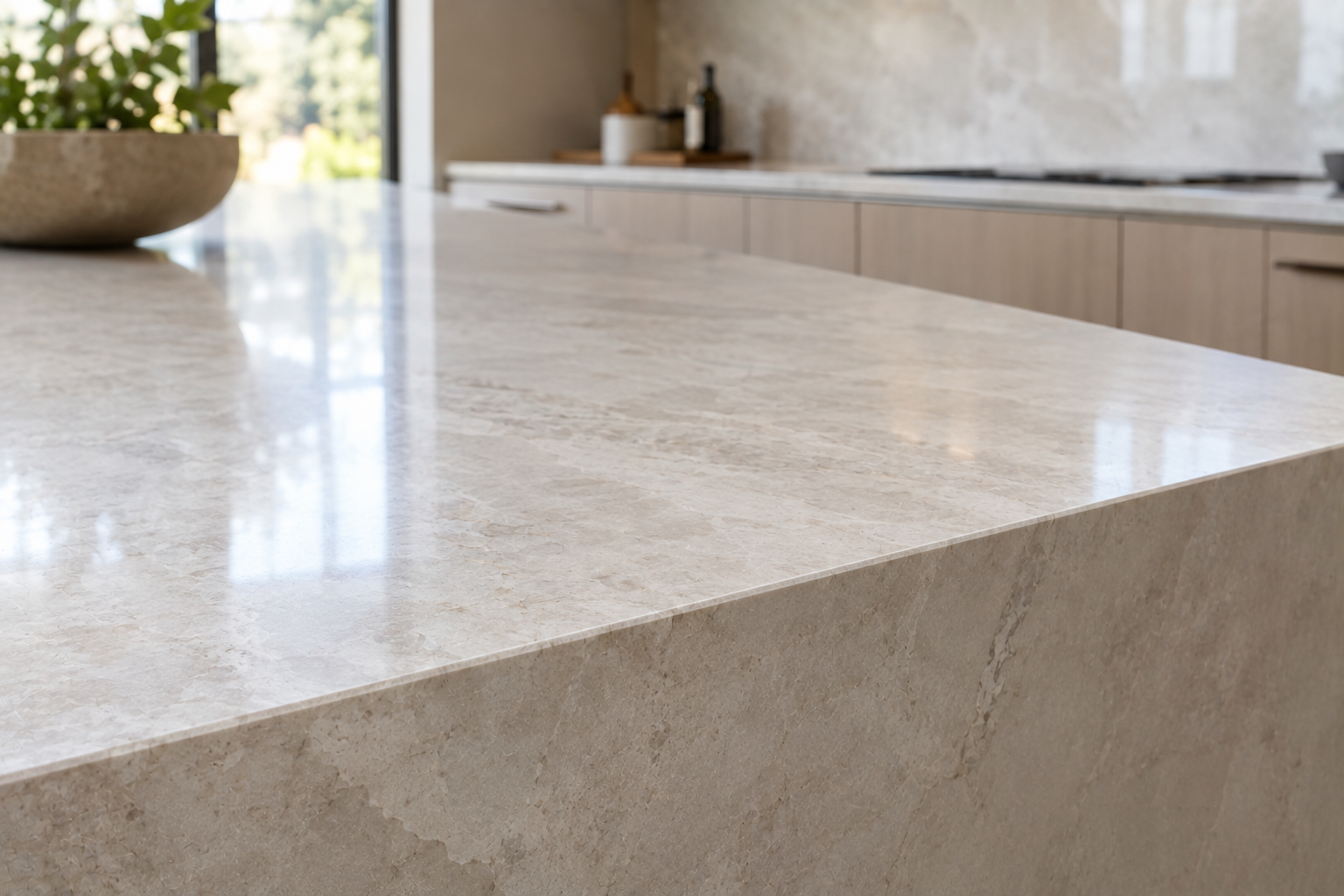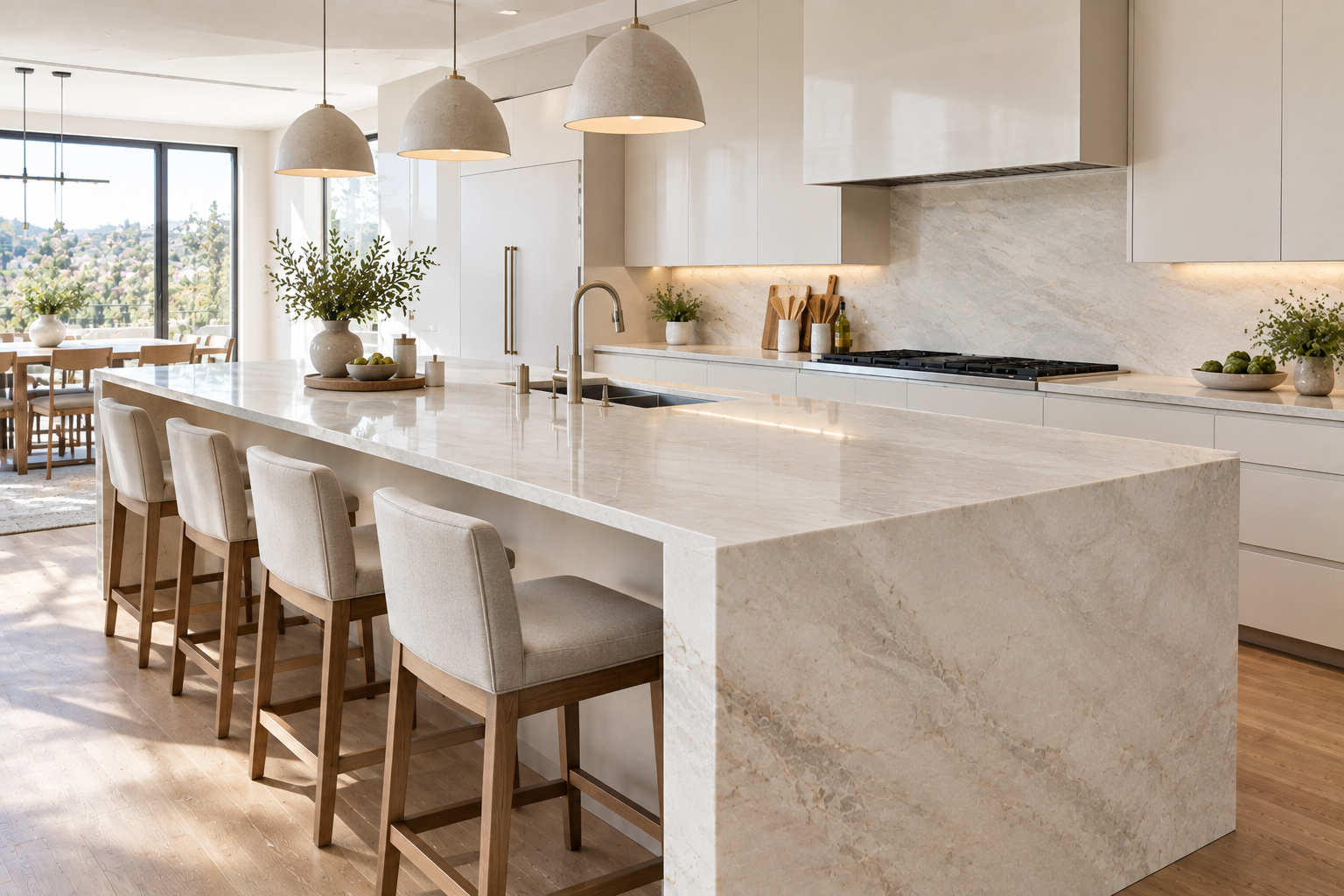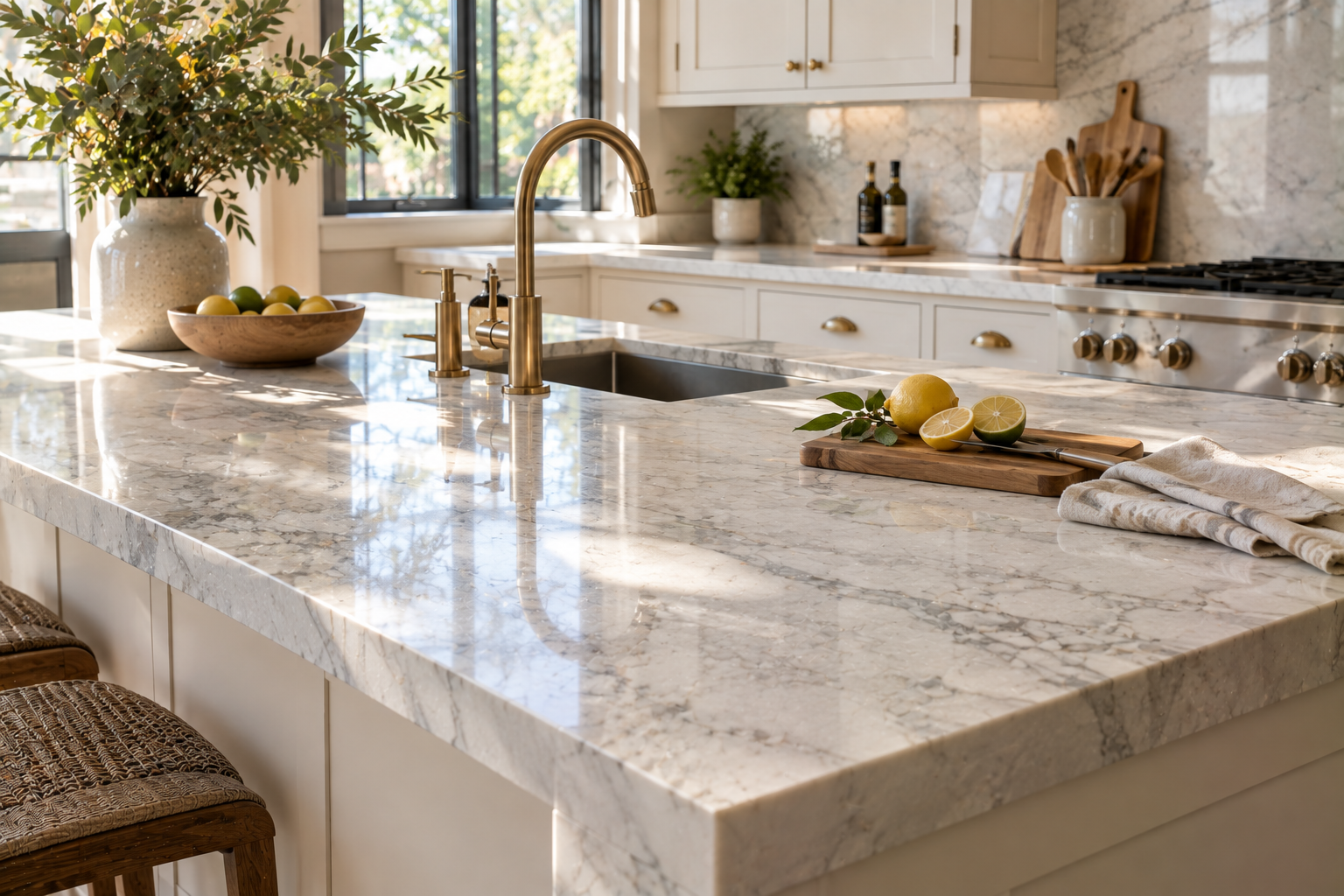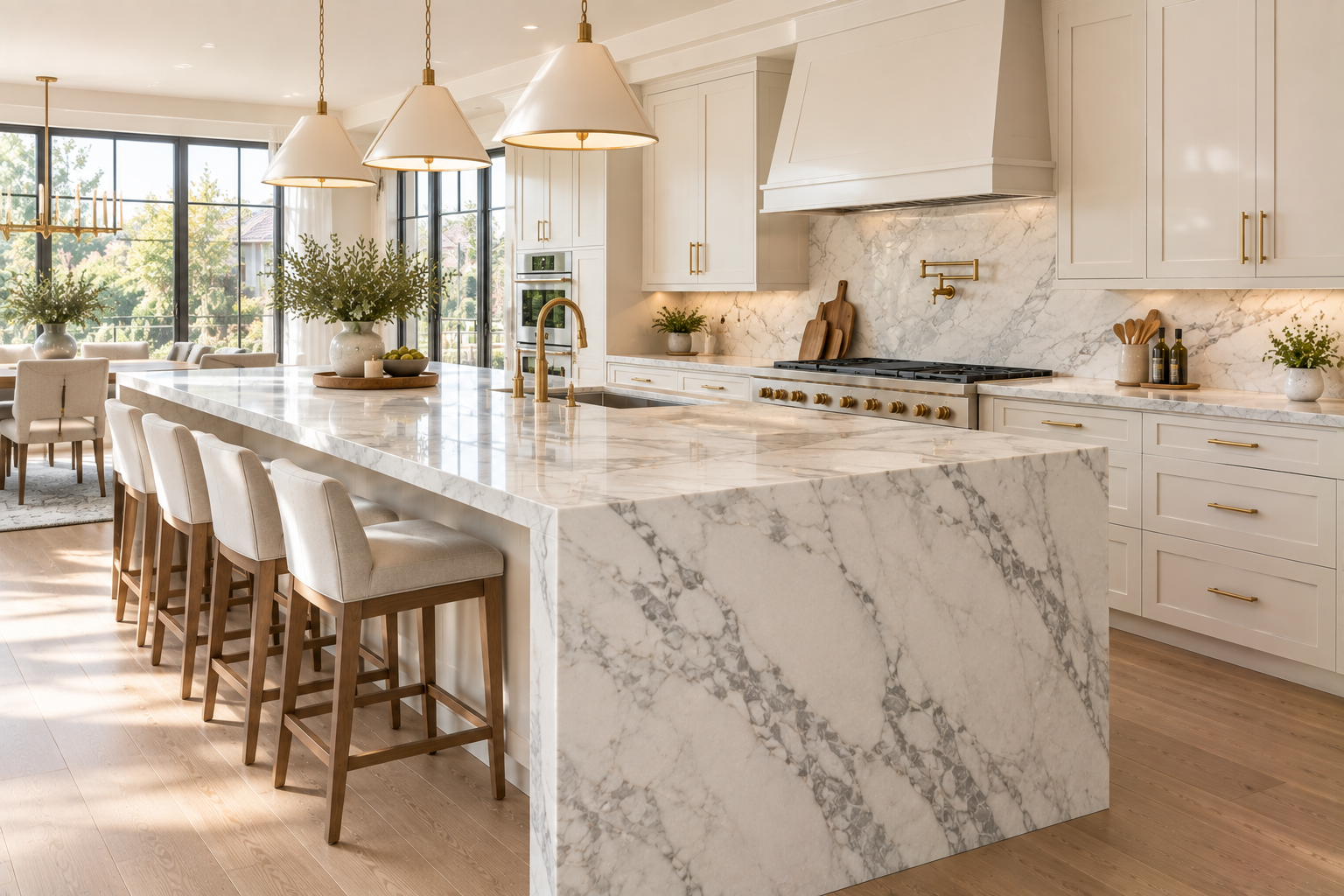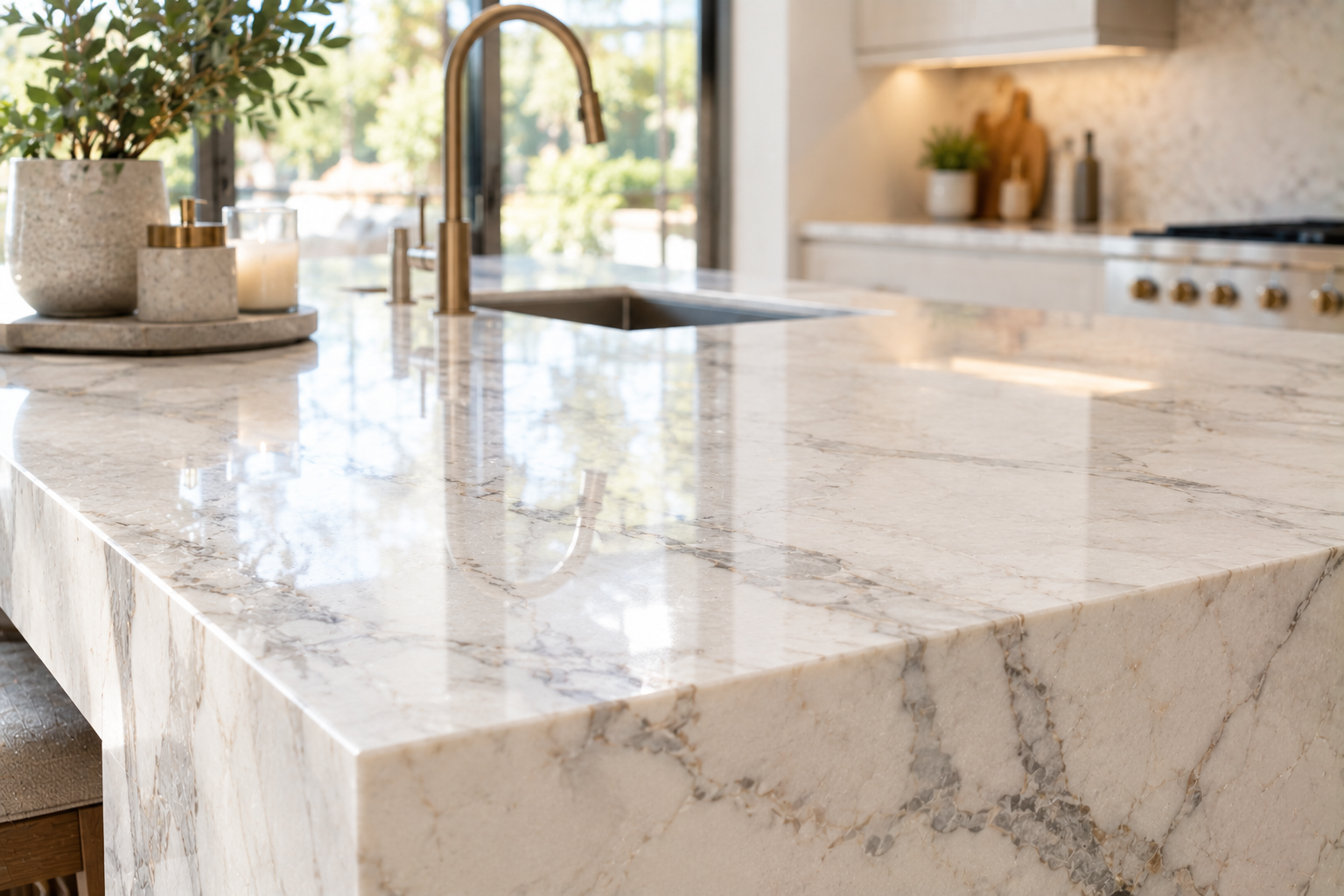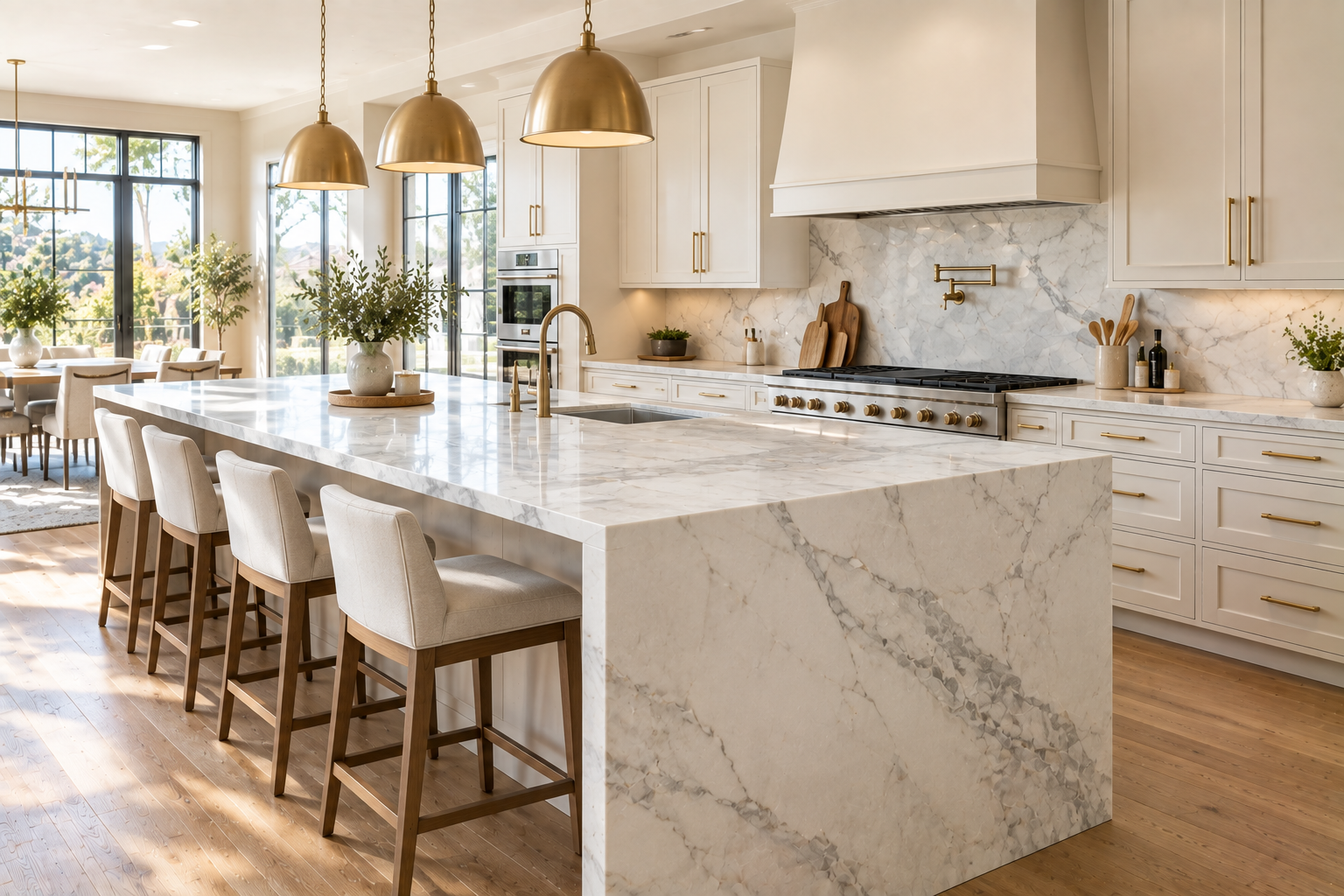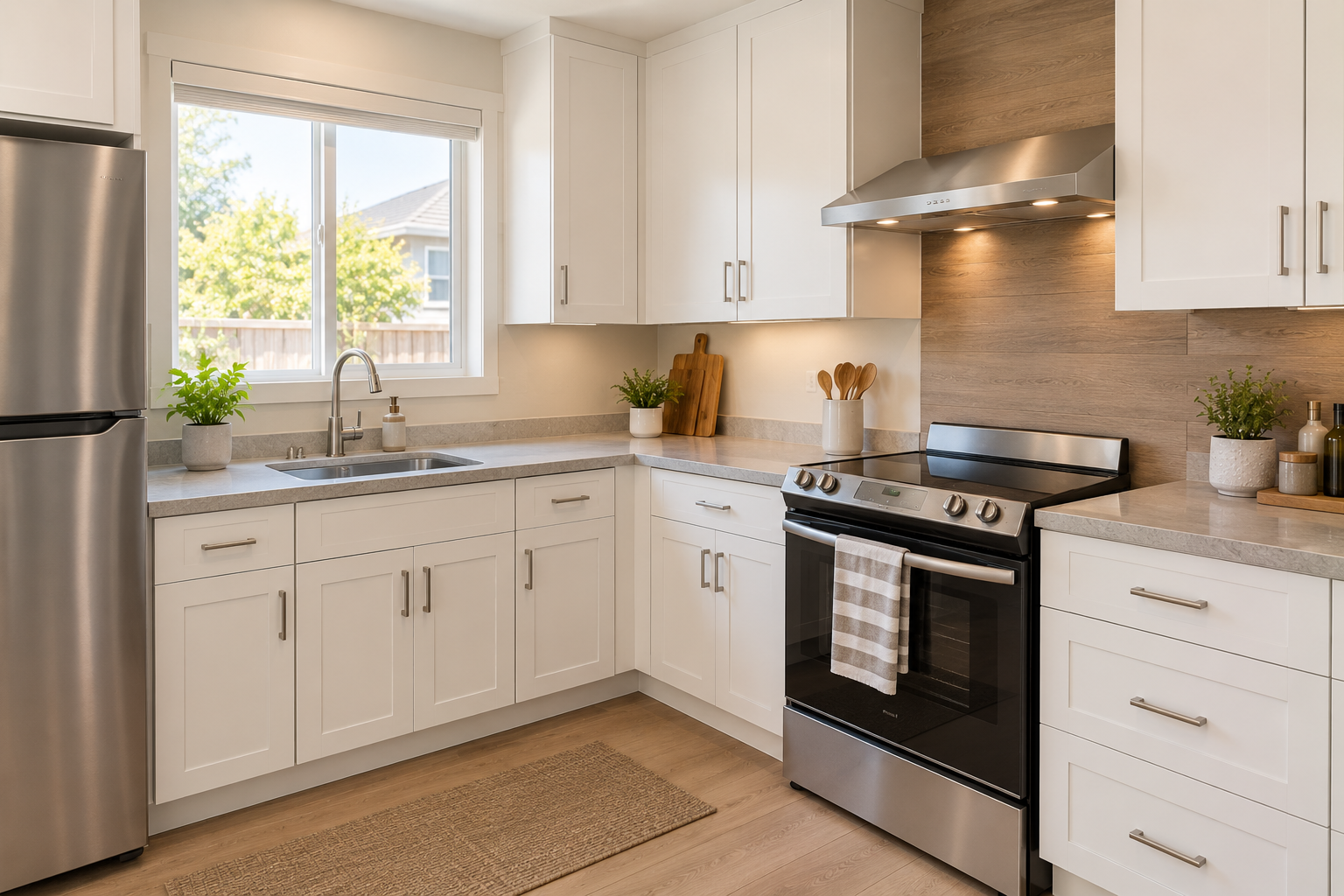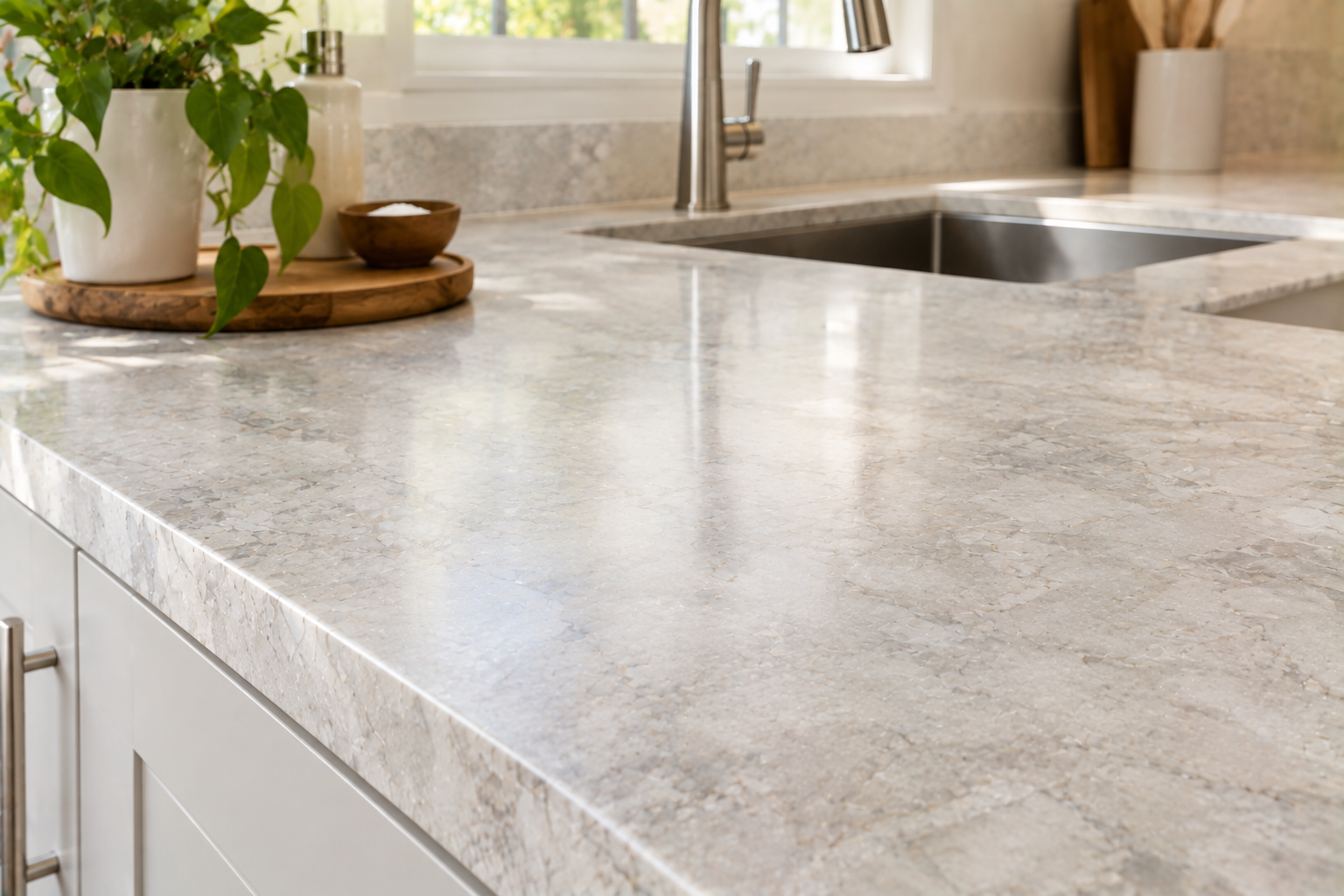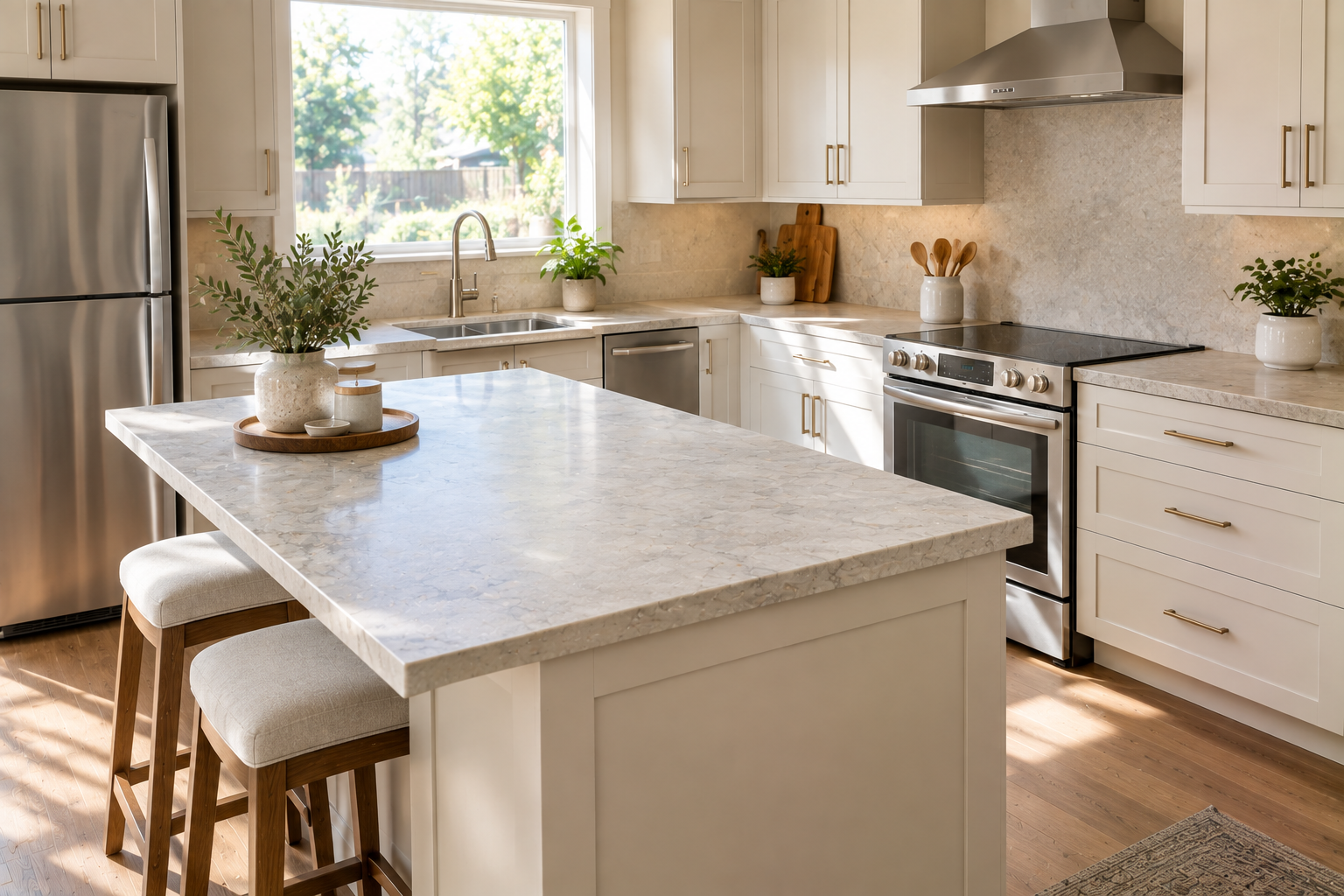
We fabricate and install kitchen countertops across Santa Clara – 95050, 95051 and 95054 – from the Victorians and Craftsman cottages of the Old Quad, through the 1950s and ’60s ranch tracts that make up most of central Santa Clara, out to the Rivermark townhomes north of 101. Different houses, genuinely different jobs. A slab going into a post-and-beam Eichler is not the same project as a third-floor Rivermark condo, and anyone quoting you the same way for both hasn’t looked closely enough.
Kitchen sink installation in Santa Clara typically runs $350 to $800 for labor on a straightforward replacement, with most jobs taking 1 to 3 hours. Undermount and farmhouse sinks cost more. Bay Area rates sit at the high end nationally. We serve 95050, 95051 and 95054, {{NEEDS INPUT HOURS}}.
Prices vary by sink type, valve condition and disposal work; confirm your quote before work begins.
the fastest swap when the cutout stays the same
clipped and sealed to stone or solid-surface counters
If you own an Eichler or another post-and-beam slab-on-grade house, and you're moving a sink or adding an island that needs plumbing or power, the question isn't the stone. It's what's running through the concrete underneath it many of these homes have radiant heating tubing cast into the slab. Cutting blind into that is an expensive afternoon.
We plan around it. If your project needs the slab opened, we'll say so early, in writing, before you're emotionally committed to a layout.
We're in an active seismic region. Unsupported stone overhangs beyond roughly 10 inches on 3cm material need real support - corbels, steel flat bar, or a plywood substrate - not optimism. Waterfall ends need proper mitre reinforcement. We spec the support with the drawing, and we'll show you the detail.
The default choice in Santa Clara, and for good reason: non-porous, doesn’t need sealing, handles a busy family kitchen, consistent pattern so what you see in the sample is what you get on the slab.
Where it fails: direct heat. A pan straight off a high-BTU burner can scorch or thermally shock the resin binder. If you cook on a wok burner daily, use a trivet — every time.
The open question: see the California regulatory section below. If you’re choosing quartz in 2026, read it first.
Natural, heat-tolerant, enormous colour range, and far more forgiving of a hot pan than quartz. Needs sealing – typically every one to three years depending on the stone’s porosity and your water. Every slab is different, so you select the actual slab, not a sample chip.
Natural stone with quartz-like hardness. Beautiful movement, genuinely durable. Two cautions we’ll give you straight: not all “quartzite” sold is true quartzite – some is softer dolomitic marble mislabelled by a supplier – and most quartzite does need sealing, despite what you’ll read on competitor sites.
Large-format, UV-stable, heat-resistant, extremely low porosity. Excellent for outdoor kitchens and for anyone who genuinely cooks hot. More demanding to fabricate – it wants a shop with the right tooling – and edge options are more limited.
Gorgeous. It will etch. If you cook with citrus, tomato or wine, you’ll see dull rings within a year. Some people love the patina. Many people regret it. If you want the look without the maintenance, a marble-look quartz or a honed quartzite is usually the better call, and we’d rather tell you that now than replace it for you in two years.
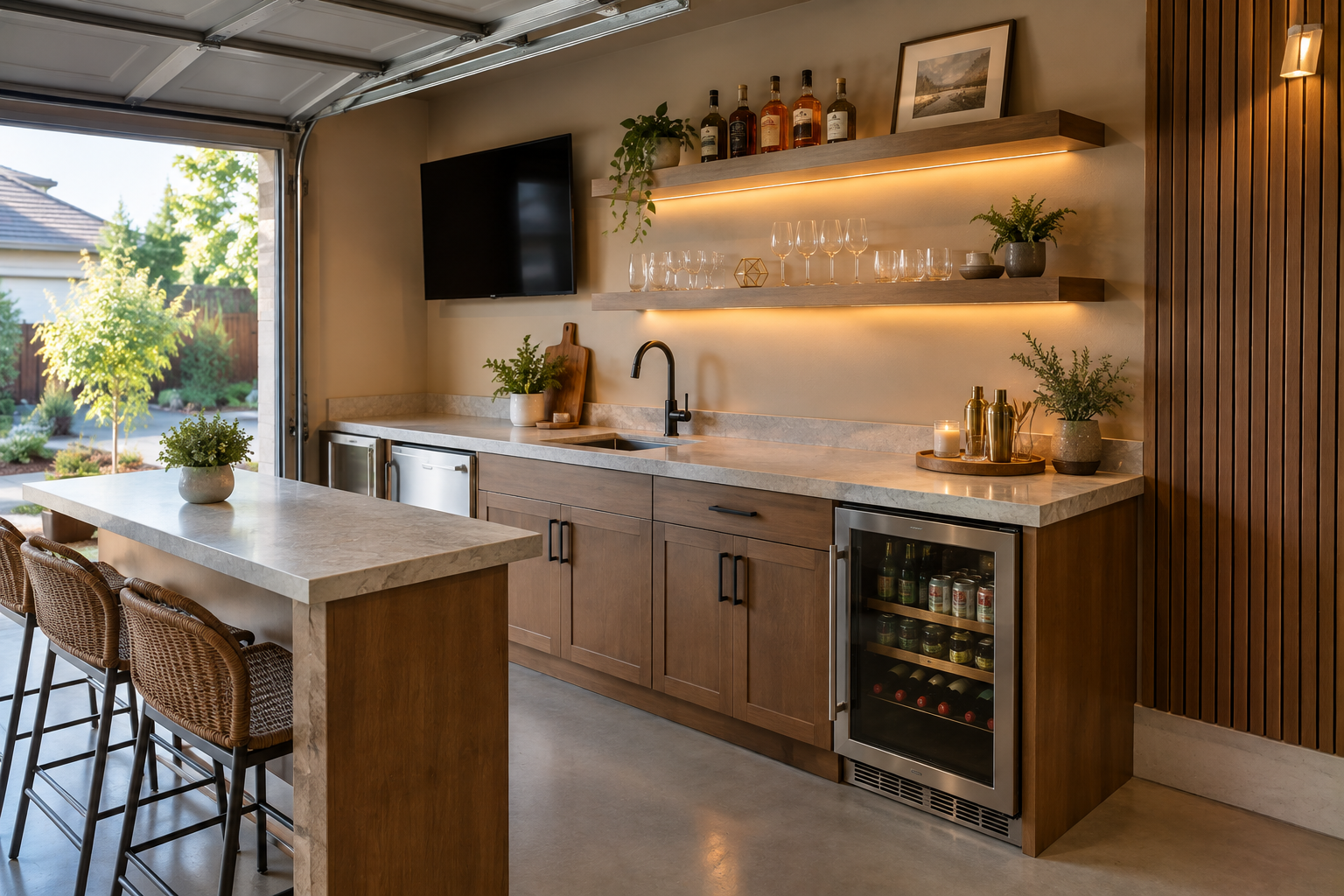
Nobody else in this market will write about laminate seriously, so: it’s the right answer for a rental turnover, a laundry room, an ADU on a tight budget, or a garage bar. Modern textured laminates look far better than their reputation. Weak points are seams and water – the classic failure is swelling and splitting at the sink cutout.
Limestone, travertine, slate, sandstone, soapstone, onyx and semi-precious slabs
All available. All with specific maintenance profiles. Ask and we’ll walk you through which ones survive a real Santa Clara kitchen and which belong on a vanity or a fireplace surround.
Laminated particleboard or MDF with a melamine surface. The most common material in modular or stock cabinet systems. Less expensive, readily available, and available in a wide range of colors and wood-look finishes. CARB Phase 2 compliance varies by manufacturer always verify.
Limitation in Santa Clara’s older homes: Laminated board does not perform well in kitchens with high moisture exposure or where heavy-duty use puts stress on hinge and drawer hardware attachment points.
Nationally, quartz runs $50 to $150 per square foot installed in 2026, with most projects landing $70 to $100. Bay Area labour and access costs push us toward the upper half of that band. Granite spans roughly $40 to $200+ per square foot installed depending on the stone.
For fabrication and installation alone on a full kitchen, quotes circulating among South Bay homeowners this past year have clustered around $5,100 to $5,900 — that's consistent with what we see. Inside a whole-house renovation of a 1950s Santa Clara home, countertops typically account for $5,000 to $15,000 of the total.
Why two quotes for the same kitchen differ by thousands:
If a quote is a single number on one line, that's the problem, not the price. Ask for it itemised. Any fabricator who won't break it out is hoping you won't compare.
Swapping countertops alone, with nothing else touched, generally doesn't require a permit. But most real kitchen projects trip a threshold, and the City of Santa Clara's residential remodel requirements are specific:
The Permit Center is at 1500 Warburton Avenue, Santa Clara, CA 95050. We'll tell you honestly which side of the line your project sits on before you commit.
This is the question we get asked quietly, and almost nobody addresses it publicly.
Under Proposition 13, your assessed value is generally capped year to year, but new construction and certain improvements can be assessed and added to your base. When you file a permit, the city transmits that record, and the County Assessor may add assessed value for qualifying improvements. Homeowners across Santa Clara County discuss exactly this outcome after kitchen and bath permits.
Two things worth understanding: a like-for-like replacement is treated differently from an addition or a substantial improvement, and the added assessment applies to the value of the improvement — it does not reassess your whole house to current market value.
We are countertop fabricators, not tax advisors. For a specific answer on your property, contact the Santa Clara County Assessor's Office or a qualified tax professional. But you deserve to know the question exists before someone files paperwork in your name.
Not yet — but this is moving, and you should understand where it stands.
What this means for you practically: quartz can still be fabricated and installed in California today. No rule has taken effect. If you're planning a 2026–2027 remodel, ask any fabricator two direct questions — what are your silica controls, and what are my low-silica and natural-stone alternatives if the rule lands mid-project. If they can't answer, that tells you something.
We track this and update this page as the rulemaking moves. Last updated: [23-09-2026].
Legitimate frustration — homeowners here regularly report visiting several showrooms and still not finding selection. Full slabs of natural stone are typically viewed at Bay Area slab yards and distributors rather than small showrooms, and some distributors sell only to licensed contractors and fabricators, not directly to the public.
We schedule slab-yard visits with clients and go with you, because selecting a natural stone slab from a 3-inch sample is how people end up disappointed. You should see the whole slab, in daylight, with your cabinet door and floor sample in hand.
Book templating after your cabinets are in and your sink is on site. If you're using a farmhouse sink, we need the actual sink — the lip geometry changes the cutout, and getting that wrong means re-fabricating a top.
For stone, no. Overlays exist for laminate, but the weight, thickness and edge geometry of a stone slab mean the old top comes off. Removal and haul-away should appear as a line on your quote.
A real question in this city, and one that deserves a real answer instead of being treated as an edge case.
Tell us how you cook. We'll spec for that, not for a photograph.
If your remodel touches the electrical service panel — which most substantial kitchen projects do — Santa Clara's reach code generally requires the kitchen to be made "electric-ready." In practice that means running a dedicated 240-volt, 40-amp circuit to where an induction cooktop could go, even if you keep gas.
Worth knowing: Santa Clara is served by Silicon Valley Power, the city's own municipal utility, which has historically kept electricity rates among the lowest in California. That's a real reason induction adoption makes more financial sense here than in PG&E territory — and it's why under-counter induction systems like Invisacook come up more in Santa Clara than almost anywhere else. Not every material or thickness supports under-counter induction. Ask before you fall in love with a slab.
Santa Clara is roughly 59% renters, and countertop damage at move-out is a recurring dispute. We do landlord and property-manager turnover work with prefab and remnant material, documented condition photos, and quick scheduling. If you're a tenant being charged for a countertop, we can give you a straight replacement figure so you know what's reasonable.
We look at your kitchen, your cabinets and your water. We ask how you cook.
Showroom, or a slab-yard visit with you. Full slab, daylight, real samples.
Measured to your actual walls. Scribed for out-of-square corners.
CNC cutting, edge profiling, polishing. Seams placed where they’re least visible and most structurally sound — and we show you the seam plan before we cut.
Level check, dry fit, set, seam, colour-matched caulk at the backsplash and wall junctions.
Care instructions specific to your material and our water.
We assess exactly what permits are needed at your consultation and handle all permit applications as part of the project. You will not deal with the City of Santa Clara Building Division directly.
and the neighbourhoods around Santa Clara University, Mission Santa Clara de Asís, Central Park, Santa Clara Square and Levi’s Stadium.
We also serve Sunnyvale, Cupertino, Mountain View, San Jose, Milpitas and Campbell — though permit requirements differ by city, and we’ll tell you which rules apply to yours.
Quartz runs $50 to $150 per square foot installed nationally in 2026, with most Santa Clara kitchens landing $70 to $100. A typical full kitchen comes to roughly $4,500 to $7,000. South Bay fabrication-and-install quotes have commonly fallen between $5,100 and $5,900 over the past year. Price is driven by material grade, seam count, cutouts, edge profile, demolition and site access.
For fabrication and installation alone on a full kitchen, quotes circulating among South Bay homeowners this past year have clustered around $5,100 to $5,900 — that's consistent with what we see. Inside a whole-house renovation of a 1950s Santa Clara home, countertops typically account for $5,000 to $15,000 of the total.
Why two quotes for the same kitchen differ by thousands:
If a quote is a single number on one line, that's the problem, not the price. Ask for it itemised. Any fabricator who won't break it out is hoping you won't compare.
Countertops alone usually don't require one. However, the City of Santa Clara requires an electrical permit for receptacle alterations when cabinets and countertops are removed and replaced, and a building permit if lower cabinets or more than 32 square feet of wall or ceiling finish is removed. The Permit Center is at 1500 Warburton Avenue.
Possibly. Under Proposition 13, qualifying new construction and improvements can be assessed and added to your base value, and permit records are transmitted to the County Assessor. Like-for-like replacement is treated differently from substantial improvement, and only the improvement's value is added — your whole property is not reassessed to market. Contact the Santa Clara County Assessor's Office for a specific answer.
No. Quartz can still be fabricated and installed today. In May 2026, California's Occupational Safety and Health Standards Board granted a petition to prohibit fabrication of engineered stone containing more than 1% crystalline silica, and Cal/OSHA published a draft rule on 16 September 2026 with public comment through 30 September 2026. No prohibition has taken effect.
For most households, quartz — non-porous, no sealing, durable. For heavy high-heat cooking, granite, porcelain or sintered stone handle thermal shock better. For hard-water areas, polished finishes show mineral spotting far less than honed. Marble is the highest-maintenance option and etches with regular cooking.
Hard water. Santa Clara Valley groundwater averages over 250 mg/L hardness, well above the 180 mg/L "very hard" threshold. Evaporating water leaves calcium carbonate deposits. It's more visible on honed and matte finishes than polished ones.
Fabrication typically takes 5 to 10 business days after templating. Installation of a standard kitchen is usually one day, with plumbing reconnected about 24 hours later once seams cure.
Yes — particularly for farmhouse or apron sinks, where the lip geometry changes the cutout. Templating should happen after cabinets are installed and levelled, with the sink on site.
No. Quartz is non-porous and doesn't require sealing. Granite, quartzite, marble, limestone and travertine do, typically every one to three years depending on the stone and your water.
Sometimes. Natural stone varies slab to slab, so an exact match is rarely possible unless the original slab or a remnant survives. For engineered stone, matching depends on whether the colour is still in production.
Yes. Slab-on-grade homes often have radiant heating tubing cast into the concrete, which changes what's possible when relocating a sink or adding an island. We identify this before design, not during demolition.
Yes — turnover work using prefab and remnant material, with documented condition photos and quick scheduling.
Bring us your kitchen dimensions, or let us come measure. You’ll get an itemised estimate — material, fabrication, edge, cutouts, demolition, haul-away and install, each on its own line — so you can compare it honestly against anyone else’s.