We build custom, high-end kitchens for homeowners across Santa Clara from the century-old Craftsman bungalows around the Old Quad to the Mediterranean-style builds in Rivermark to the mid-century Eichlers scattered through the city’s north side. Every one of those homes has a different electrical panel, a different structural situation, and a different set of problems hiding behind the drywall. This page walks through what an actual high-end kitchen remodel costs here in 2026, what it involves, a real before-and-after from a recent Santa Clara project, and what nobody tells you until you’re three weeks into demo.
If you’re comparing luxury kitchen remodeling contractors in Santa Clara right now, the questions below are the ones worth asking every single one of them before you sign anything.
A lot of contractors slap the word “luxury” on a $40,000 refresh with stock cabinets and call it a day. That’s not what we’re talking about.
In Santa Clara, a genuine luxury kitchen remodel typically means:
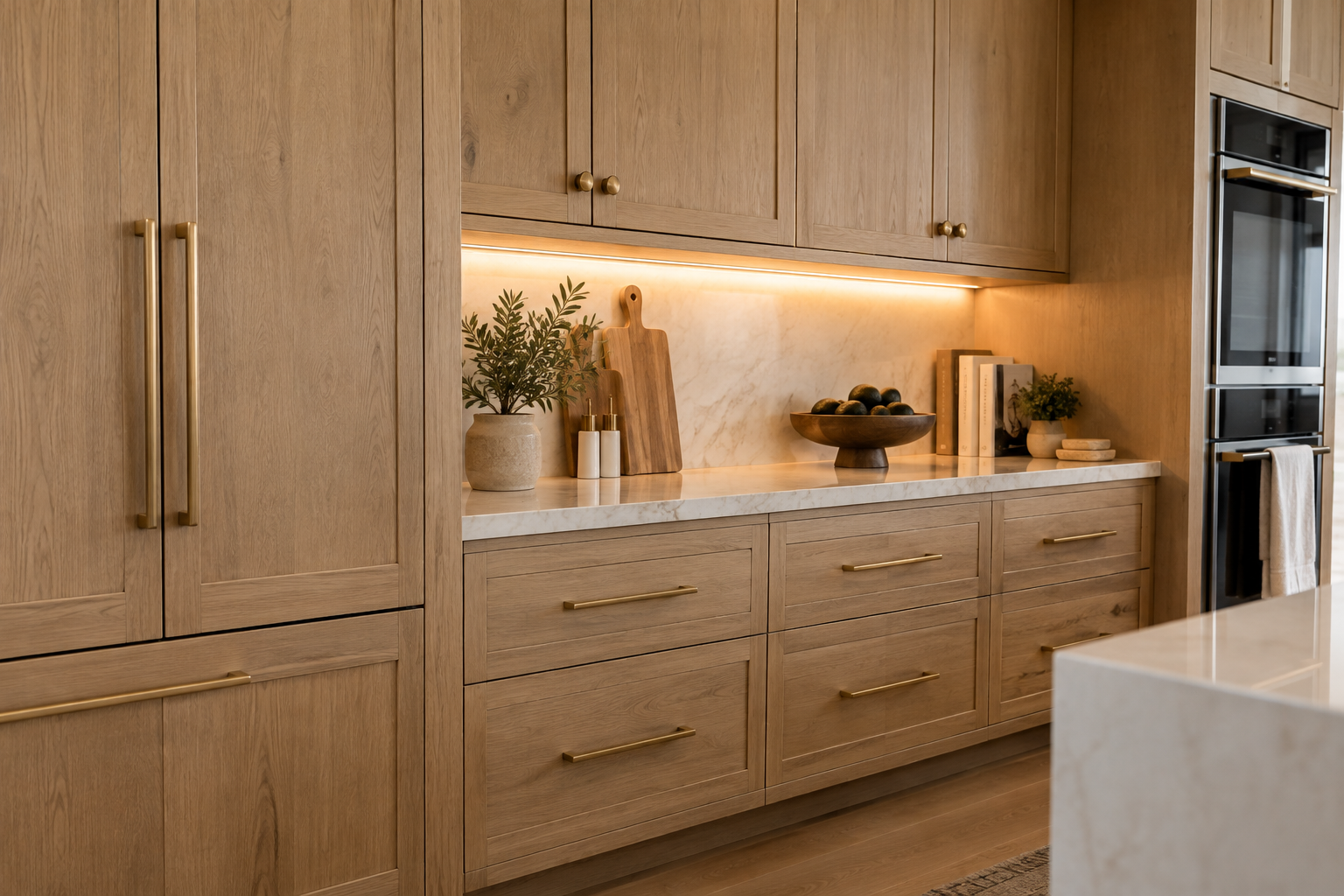
built to the space, not ordered from a catalog and trimmed to fit
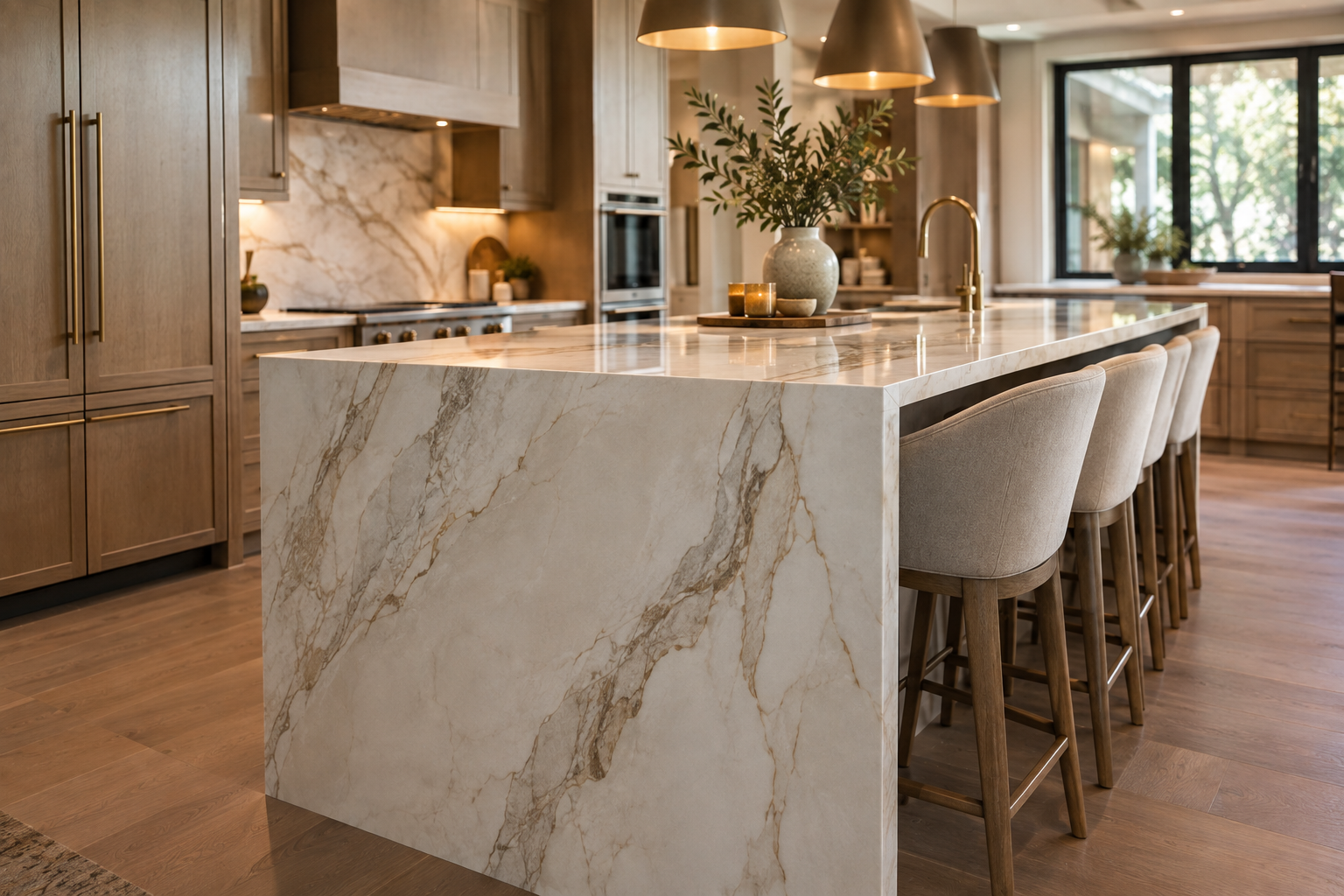
quartzite, marble, or a slab-matched quartz with waterfall edges on an island
quartzite, marble, or a slab-matched quartz with waterfall edges on an island
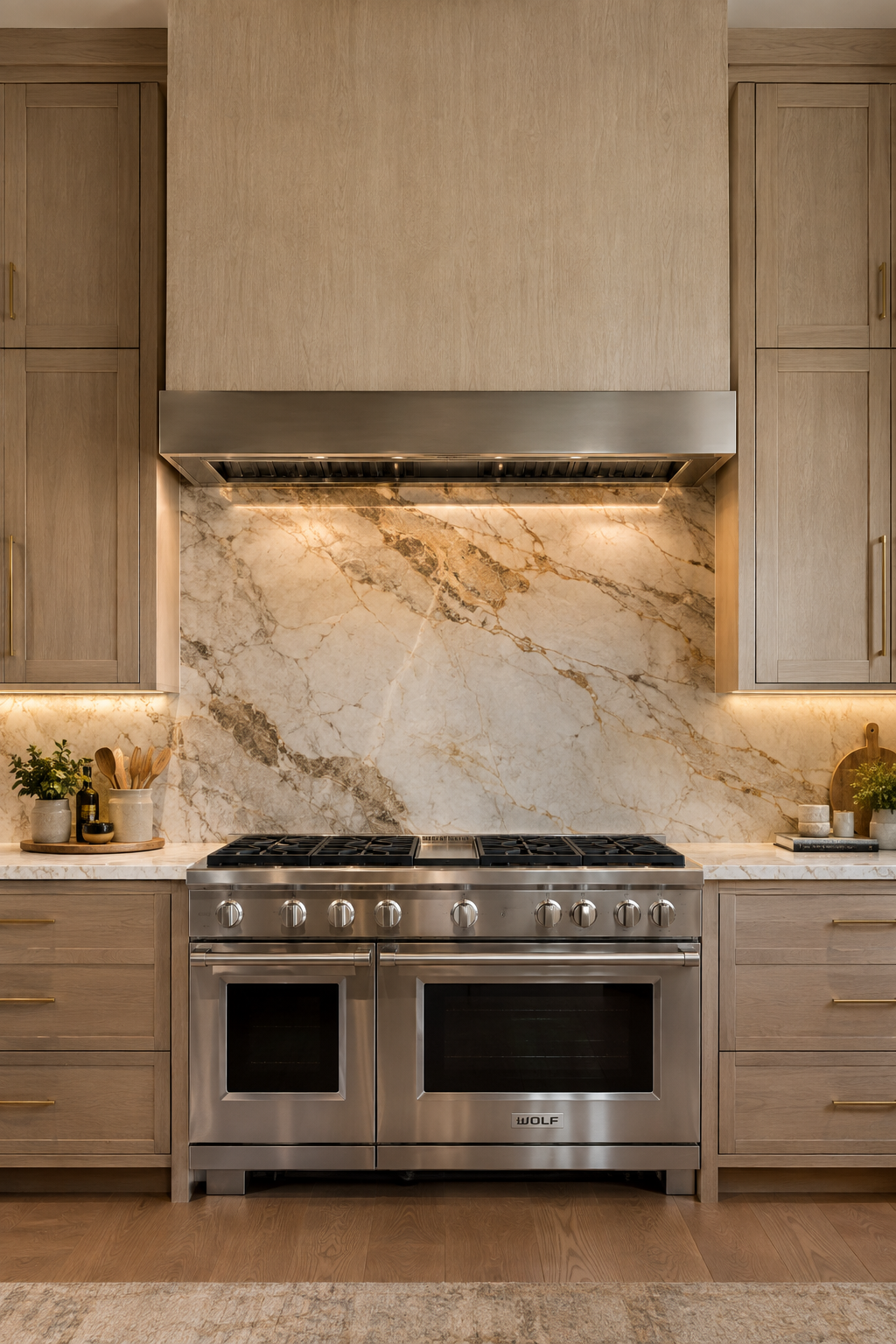
Wolf, Sub-Zero, Miele, or Gaggenau, not big-box stainless
Homeowners ask us this on the first phone call, every time, and we’d rather just tell you than make you sit through a sales pitch to find out.
A few numbers worth knowing before you get a bid:
If a bid you’re holding right now looks dramatically lower than these ranges for comparable scope, that’s worth asking hard questions about before you sign anything we’ll get into why further down.
This is the part almost every “luxury remodeling” website skips, and it’s the part that actually determines whether your project finishes on schedule.
Almost every real kitchen remodel in Santa Clara requires a permit. If your project touches electrical, plumbing, gas lines, or the structure of the home – which most luxury remodels do – you’re going through the city’s Building Division and Permit Center. Plan review typically runs 3 to 6 weeks, and that clock doesn’t start until your architectural drawings and engineering are actually ready to submit, which itself usually takes another 3-6 weeks to prepare.
A few things specific to building here that catch homeowners off guard:
Skipping the permit is not a shortcut – it’s a liability you’re passing to yourself. Unpermitted work is one of the most common issues that surfaces during Bay Area home sales, and it can reduce a home’s resale value by 15-20%. We manage every permit application, inspection, and – where applicable historic review ourselves, so this isn’t something you have to chase down mid-project.
We don’t run a script where we swap the city name and call it “local.” Santa Clara’s housing stock is genuinely varied, and the right approach to your kitchen depends heavily on which part of the city – and which era of home – you’re working with.
The historic core around Santa Clara University, full of Victorian, Craftsman, and early-1900s homes. These kitchens are almost always small, compartmentalized, and wired for a completely different era of appliance load. The recurring issue we run into here: knob-and-tube or early-generation electrical that simply cannot carry a Wolf range, a panel-ready Sub-Zero, and double ovens on the same circuit path. A luxury remodel in an Old Quad home usually starts with a main panel upgrade before a single cabinet gets ordered and if the home is on the city’s historic resource list, exterior work needs Landmarks Commission sign-off too.
Built primarily in the early 2000s, Colonial Revival and Mediterranean-influenced, priced between roughly $1M and $3M. These homes don’t have the structural or electrical problems of older stock – the challenge here is almost entirely a finish-level upgrade. Builder-grade cabinets and laminate counters get swapped for full-custom millwork, waterfall quartz islands, and professional appliance packages. Less demolition risk, more design decision-making.
Santa Clara holds one of the Bay Area’s more significant clusters of mid-century-modern housing, including Pomeroy Green – a 1961 Eichler-designed community added to the National Register of Historic Places in 2021. Eichler kitchens were built around post-and-beam construction, low-slope rooflines, and glass walls that flood the space with light – but they were also built with minimal insulation and kitchens sized for 1961 appliance standards. Remodeling one well means preserving the clean lines and structural rhythm of the original design while quietly modernizing everything behind the walls.
Ranch-style and California bungalow stock, generally priced $1M–$2M. Similar profile to Rivermark – usually a finish and layout upgrade rather than a full structural gut.
We’ve had enough of these conversations with Santa Clara homeowners to know what actually keeps people up at night during a remodel. Here’s the honest version.
A bid that's 30–40% below everyone else's for the same scope of work is a red flag, not a deal. It usually means one of three things: unlicensed subcontractors, materials substituted after signing, or change orders designed to make up the difference once you're already committed. Always ask for the license number up front and verify it directly with the CSLB (California's contractor licensing board) before you sign anything it takes two minutes and it's the single best protection you have.
Because it usually does, and anyone promising you 6 weeks for a full luxury remodel is either talking about a partial refresh or not being straight with you. Realistic sequence: 1–2 months of design and material selection, 3–6 weeks of permit plan check, then 8–16 weeks of actual construction depending on scope. The kitchen itself is typically out of commission for 6 8 weeks of that build window.
It happens permits and inspections reduce risk, they don't eliminate it entirely. This is exactly why the contractor's own quality control matters as much as the city's sign-off. We don't treat a passed inspection as the finish line; it's a checkpoint.
This is the single most common regret we hear about other companies' projects not ours, because we price the full scope, including electrical and structural contingencies, before you ever sign. Costs that show up mid-project are almost always things that should have been caught during the initial walkthrough: old panels, hidden water damage, non-code-compliant existing work behind the walls.
The most common regrets we hear from homeowners who went with someone else: undersized sinks, drawer microwaves that are more novelty than function, overlay cabinet doors when they actually wanted the flush, furniture-grade look of inset doors, and countertop materials chosen for the showroom sample instead of how they perform under a five-year-old's spaghetti sauce. We walk every client through material trade-offs in plain language before ordering anything — not after.
Simply contact us through our website or email, and we’ll schedule a free consultation to understand your needs.
Santa Clara sits inside the tech corridor NVIDIA, Intel, and Applied Materials all have headquarters here, and Levi’s Stadium anchors the north end of the city. A large share of the households investing in serious kitchen remodels are tech-industry families with high household income and specific expectations: clean integration of smart appliances, panel-ready builds that hide the tech, dedicated circuits for EV charging in the garage, and a kitchen that functions as well for hosting as it does for daily cooking.
That context matters for design decisions. We’re seeing consistent demand across current projects for:
After more than a decade at the top, all-white cabinets have slipped to the third most-requested color nationally, behind natural wood finishes. In Santa Clara we’re seeing this show up as light white oak, mid-tone natural oak, and darker walnut — a more refined, less “rustic farmhouse” take on wood than what was popular a few years ago.
Deep emerald, juniper green, and indigo blue cabinetry — not just an island accent, but full walls of cabinets — is showing up in high-end projects at a rate that would have seemed extreme two or three years ago.
not an upgrade. A Sub-Zero refrigerator, a dishwasher, even a microwave drawer built into a custom panel that matches the surrounding cabinetry — the goal is a kitchen where the only visible appliance is the range itself.
Simply contact us through our website or email, and we’ll schedule a free consultation to understand your needs.
We build to what actually holds up in a working kitchen over the next fifteen years, not just what photographs well on the day it’s finished — which is why we’ll talk you through the trade-offs of a trend before you commit a six-figure budget to it.
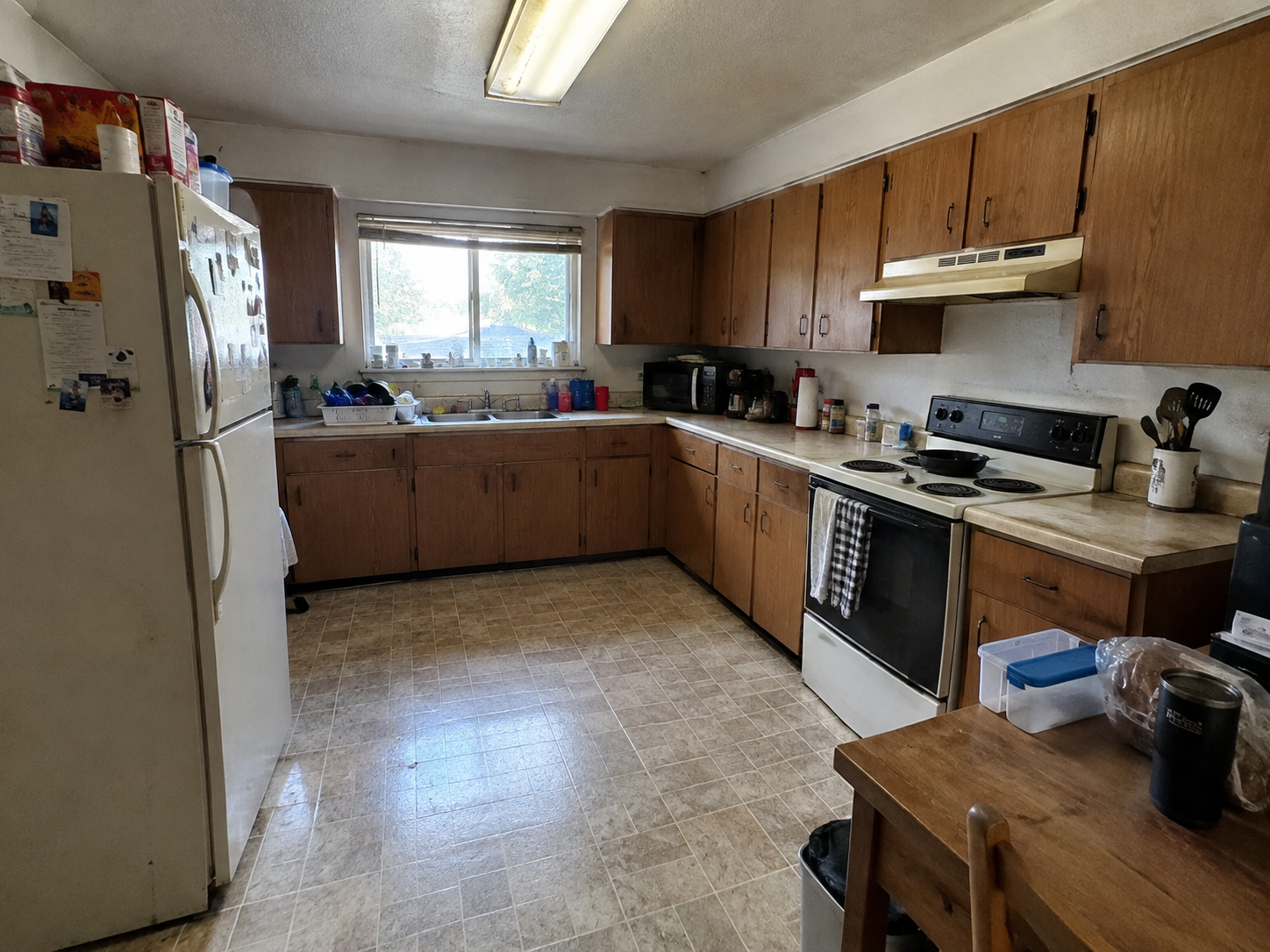
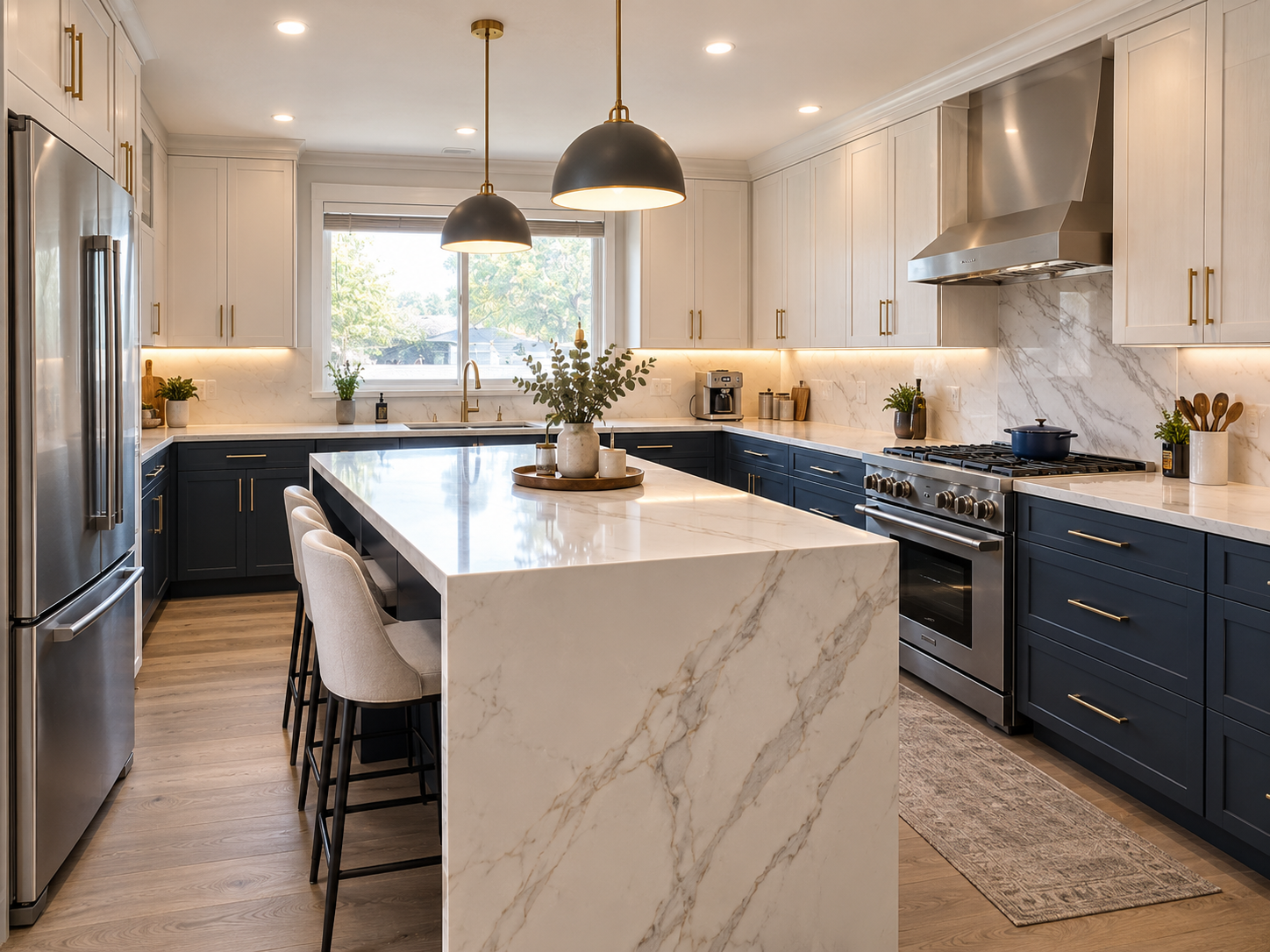
Every kitchen has a constraint the homeowner didn’t choose – an existing structural column, an outdated panel, a layout that was never designed around how the family actually lives. Here’s how one recent Santa Clara project worked through exactly that.
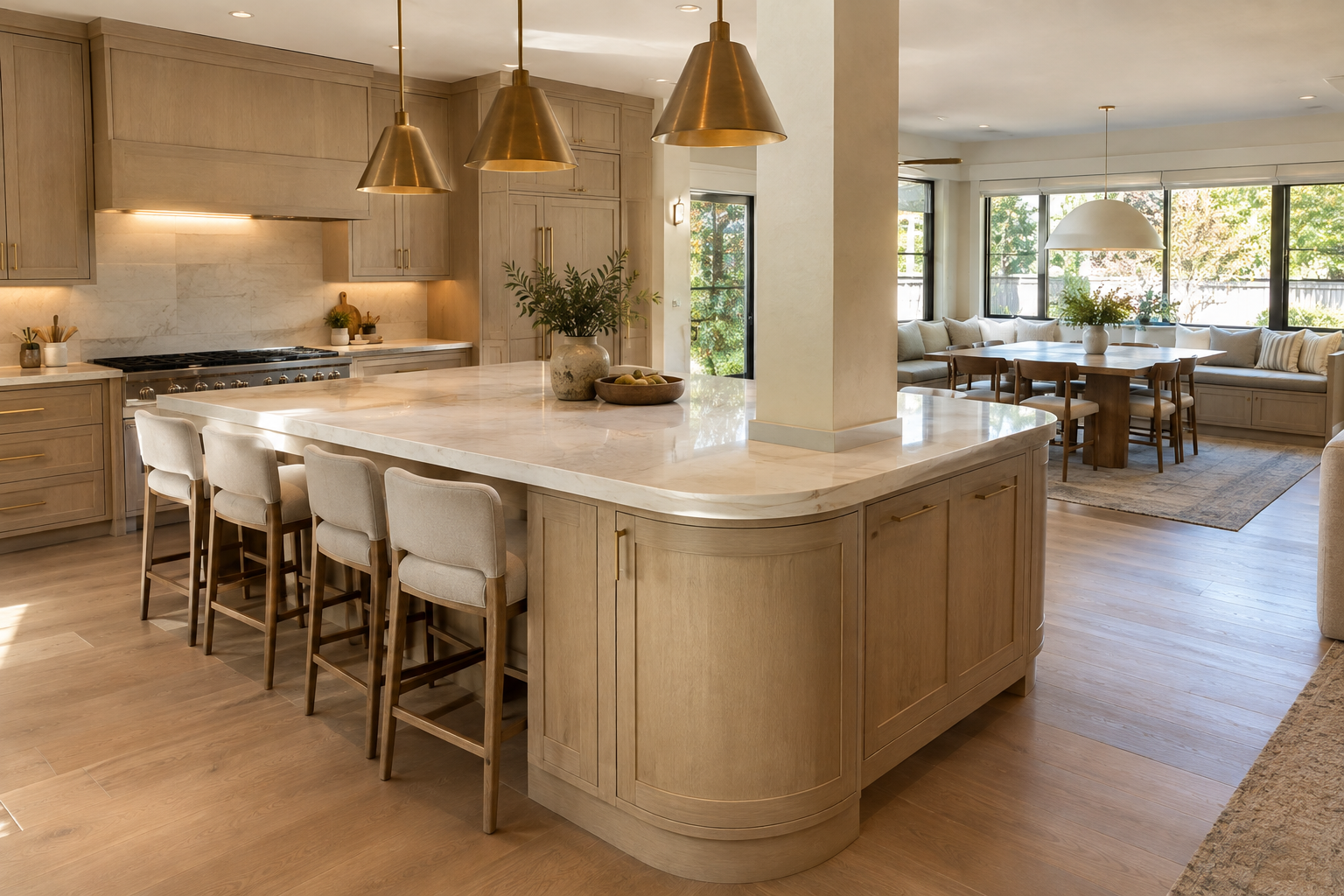
Before: The kitchen and adjoining dining area were dated and closed off from each other, running on the home’s original electrical service with no dedicated circuits for modern appliance loads. A structural column sat awkwardly near the center of the kitchen – the kind of obstacle that gets treated as dead space in most remodels, boxed in and worked around rather than addressed.
The work:
After: What was a closed-off, dated kitchen with a structural liability at its center became the home’s main gathering space – a fully custom kitchen with a curved island as its centerpiece, modern electrical infrastructure built for the next twenty years of appliance technology, and a dining area that now functions as an extension of the kitchen rather than a separate room. The homeowners didn’t just get a better-looking kitchen; they got a panel and circuit layout that will support whatever they add next, whether that’s a second EV or a future appliance upgrade.
This is the difference between a remodel that solves today’s problem and one that solves the house’s problem. Every project we take on gets assessed the same way: what’s actually going on behind the walls, not just what finish goes on top of them.
That process stays the same whether your kitchen needs a finish-level update or a full structural rebuild only the timeline changes. You’ll know your full scope and cost before a single permit is filed.
We walk your existing kitchen, photograph and measure the current space, and talk through what’s actually possible given your home’s age, panel capacity, and structure. This “before” documentation also becomes the baseline we measure the finished project against.
Cabinetry, stone, appliances, and layout finalized with full pricing before anything is ordered.
We handle the full application through the Building Division and Permit Center, plus Historical and Landmarks Commission review if your property requires it.
Demolition, structural and electrical work, rough-in, and finishes, with scheduled inspections at every required stage. We document progress at each major milestone, not just the finished result.
Nothing is considered complete until you’ve walked the finished space with us, compared it against where you started, and confirmed every detail matches what was agreed.
A luxury kitchen remodel in Santa Clara typically costs between $130,000 and $200,000+, depending on the scope of structural changes, cabinetry level, and appliance brands. Standard high-quality renovations without major structural work run $85,000–$130,000, and mid-range updates start around $41,000–$59,000.
Yes, in almost every case. Any work involving electrical, plumbing, gas lines, or structural changes requires a permit through the city's Building Division and Permit Center. Unpermitted work can reduce your home's resale value by 15–20% and create problems when you eventually sell.
Realistically, 4 to 7 months from initial design through final walkthrough: 1–2 months for design and material selection, 3–6 weeks for permit plan check, and 8–16 weeks of construction depending on scope. The kitchen is typically unusable for 6–8 weeks during active construction.
Spring, ahead of the dry summer season. Santa Clara's rainy season runs roughly December through March, so starting construction before summer avoids weather-related delays on any exterior work and keeps your project on the tightest possible schedule.
Verify their CSLB license number directly with the California Contractors State License Board before signing anything. Be cautious of any bid significantly below others for the same scope — it often signals unlicensed subcontractors or materials that get substituted after the contract is signed.
If your property is a designated historic resource — a meaningful number of homes in the Old Quad qualify — exterior alterations require review by Santa Clara's Historical and Landmarks Commission in addition to the standard building permit.
Wood-tone cabinetry (white oak, walnut) has overtaken all-white cabinets as the top choice in high-end kitchens, bold full-perimeter cabinet colors like emerald and indigo are gaining ground in luxury projects, panel-ready appliances that hide behind custom cabinet fronts are now a standard expectation rather than an upgrade, and natural stone countertops with dramatic veining — often extended into a full-height backsplash — have become the centerpiece of the design rather than an afterthought.
Wolf, Sub-Zero, Miele, and Gaggenau are the standard premium brands in luxury kitchen builds, typically installed as panel-ready or fully integrated units so the appliance face matches the surrounding custom cabinetry.
No two Santa Clara kitchens are the same. We will visit your home, talk through real figures, and give you an honest view of what your project needs before you commit to anything.